Cooking Guides
How to Cook with Onions: Raw, Sautéed, Caramelised and Air Fried
Onions turn up in my cooking all the time. Sometimes they go in raw, thinly sliced through a salad. Sometimes they're mixed into a dish, softened gently in a pan, browned a little further for a deeper flavour, or cooked in the air fryer.
What I love is how differently the same onion behaves depending on how I cut it and cook it. This guide covers choosing an onion, cutting it, using it raw, sautéing, browning, caramelising and air frying, so you can pick the method that suits the dish you're making.
By Esther LackiePublished
Choosing an Onion
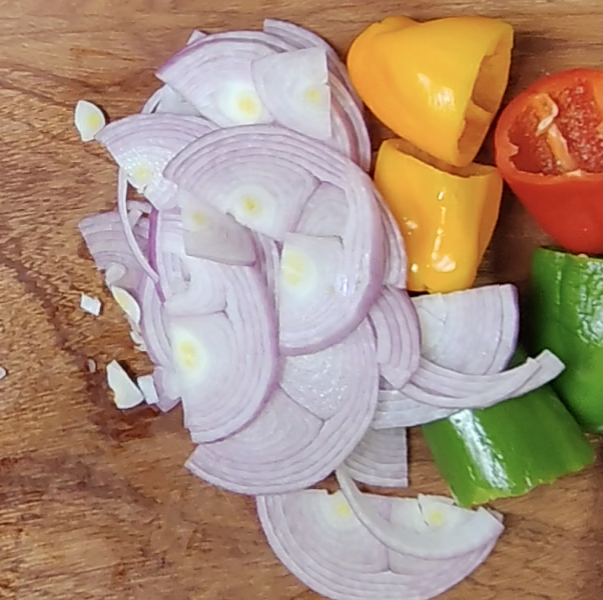
For everyday cooking, most of us reach for red, white or yellow/brown bulb onions. None of them is the one right onion. They just lean in slightly different directions.
- Red onions: colourful and often used raw in salads and salsas, although they cook perfectly well too.
- White onions: a clean, fairly assertive onion flavour that works raw or cooked.
- Yellow/brown onions: a useful everyday cooking onion that works particularly well in cooked dishes.
Flavour intensity varies with the variety, how old the onion is and the individual onion itself, so two onions of the same colour can still taste a little different.
How You Cut an Onion Matters
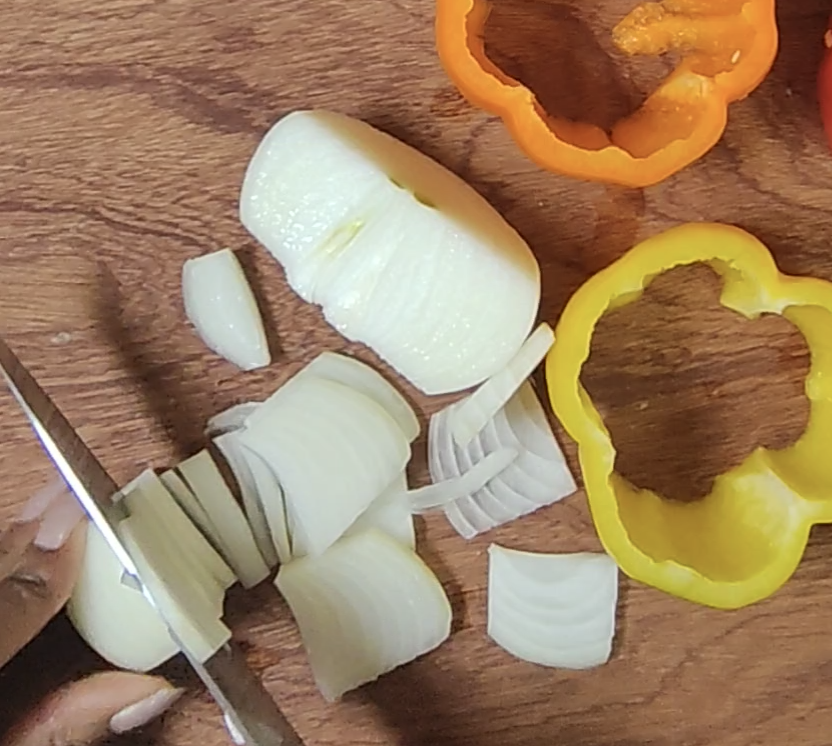
The way you cut an onion changes its texture and how it behaves in a dish.
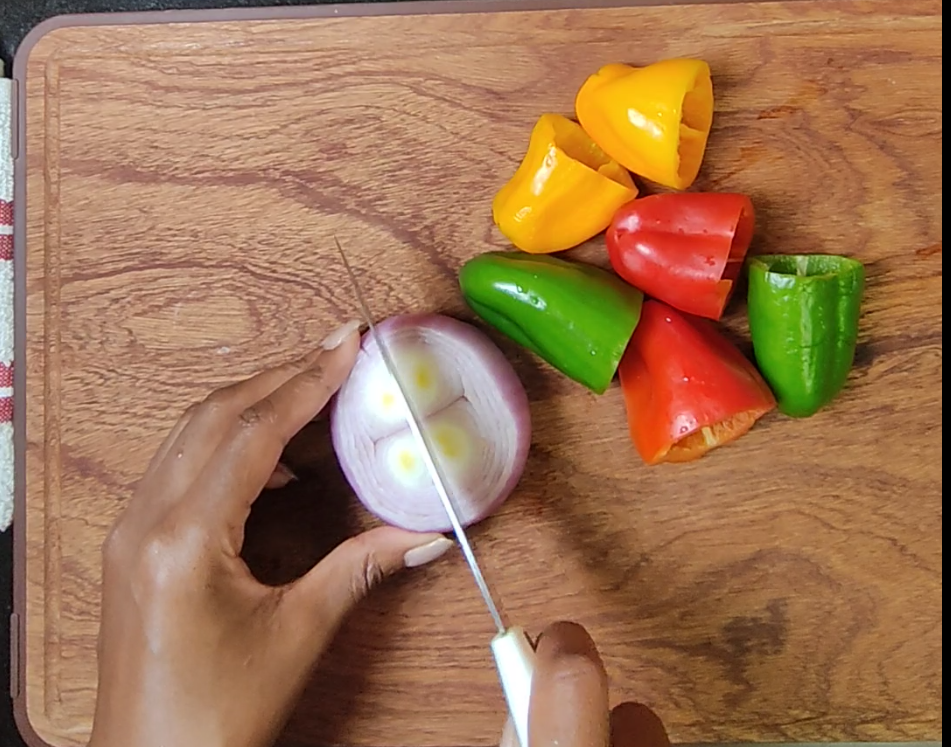
- Thin slices or half moons: good when you want the onion to stay visible, like in salads, sandwiches and dishes where sliced onion is cooked.
- Chunks: for when you want a more substantial bite of onion.
- Diced or chopped: for when the onion should spread through a dish or become part of a cooking base.
Using Onions Raw
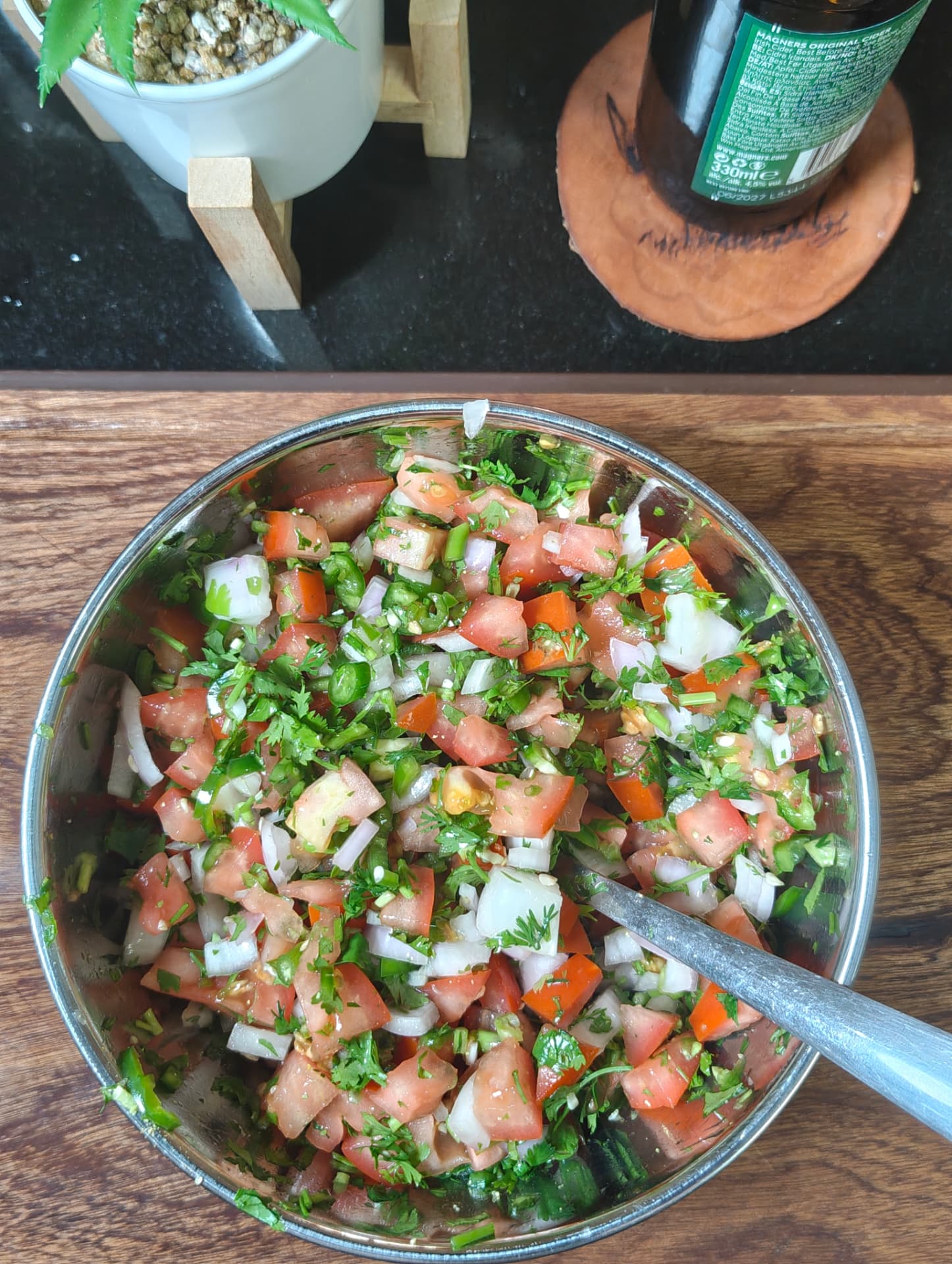
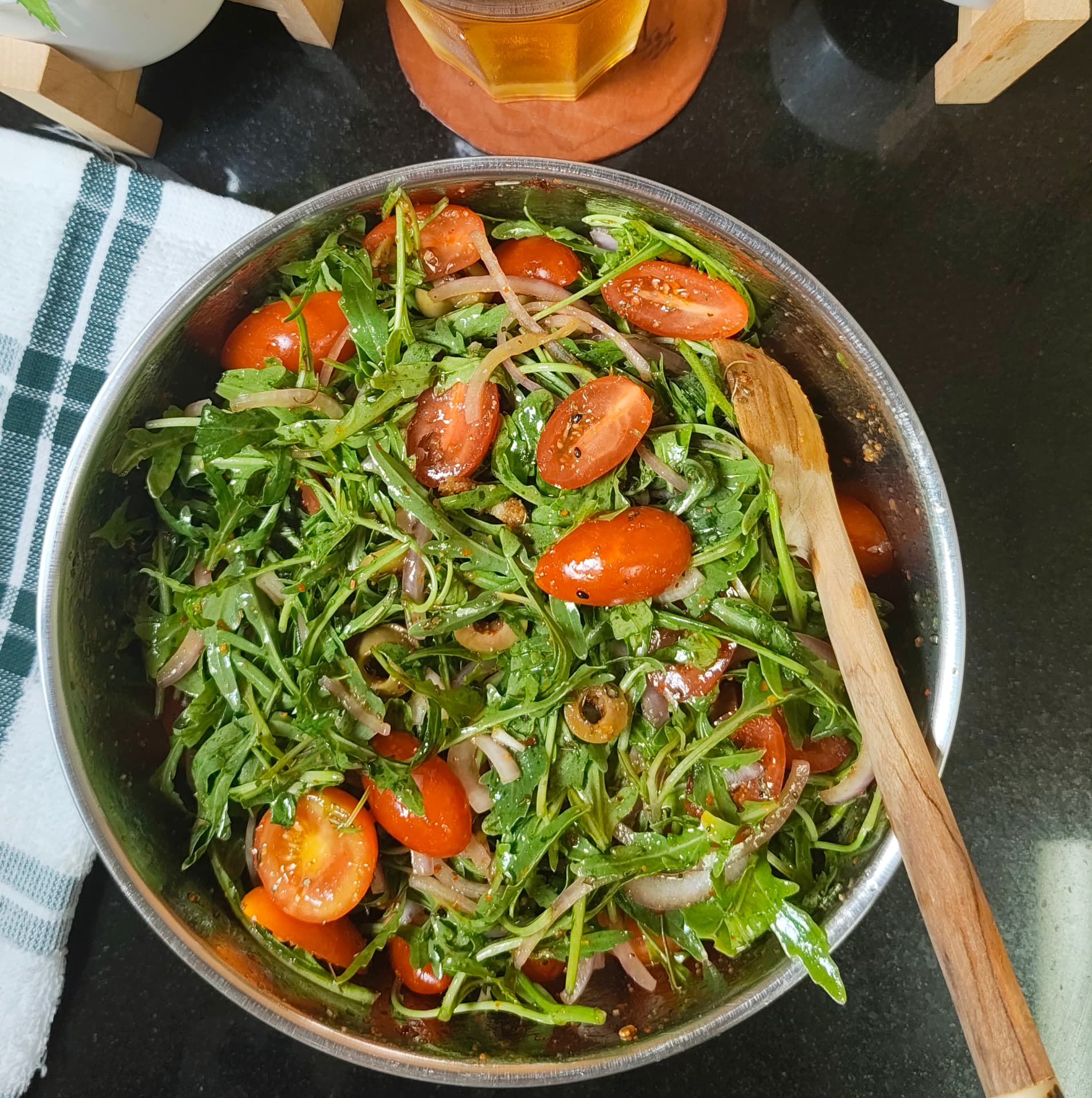
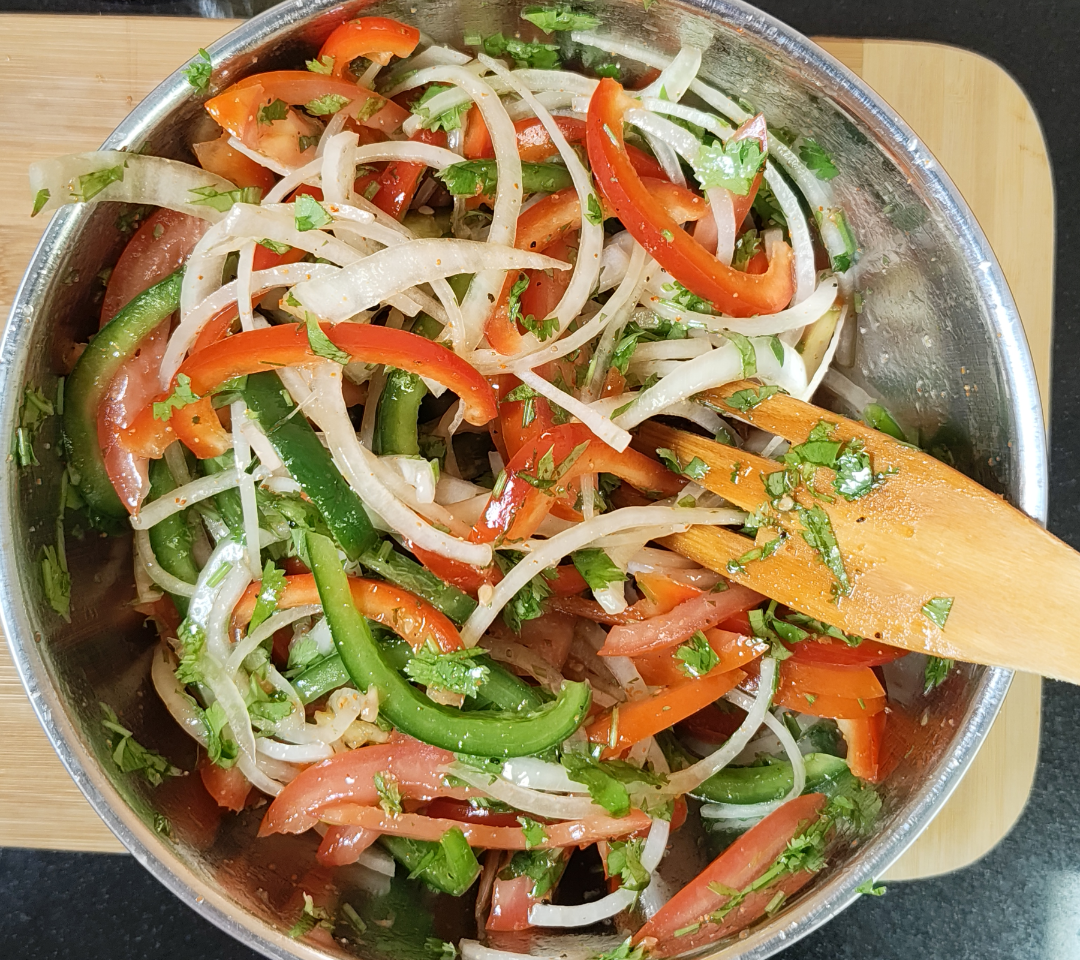
Raw onion keeps more of its sharpness and crunch than cooked onion. Thinly sliced or chopped, it brings a fresh bite to salads and salsas.
I use raw onion a lot this way. Red onion goes into my Easy Kenyan Kachumbari (Fresh Tomato & Onion Salsa) and my Easy Greek Style Salad with Feta, thinly sliced onion goes into my Easy Rocket & Colourful Bell Pepper Salad, and chopped white onion goes into my Easy Black Eyed Peas Salad.
How to Sauté Onions
Sautéing is the everyday way to soften onions in a pan.
- 01
Heat a little fat
Add a suitable cooking oil or fat to a pan.
- 02
Add the onions
Add your prepared onions to the pan.
- 03
Cook gently
Cook over low to medium heat, stirring as needed while the onions soften.
As they cook, watch how they change. They start raw and firm, then begin to soften, become more translucent and, if you keep cooking, start to take on some colour.
There isn't one sautéing time that works for everyone. The size of your pan, how many onions you're cooking, how you've cut them and the heat all make a difference.
Very high heat can brown or burn onions before they've had a chance to soften properly, so a gentler heat is usually easier to control.
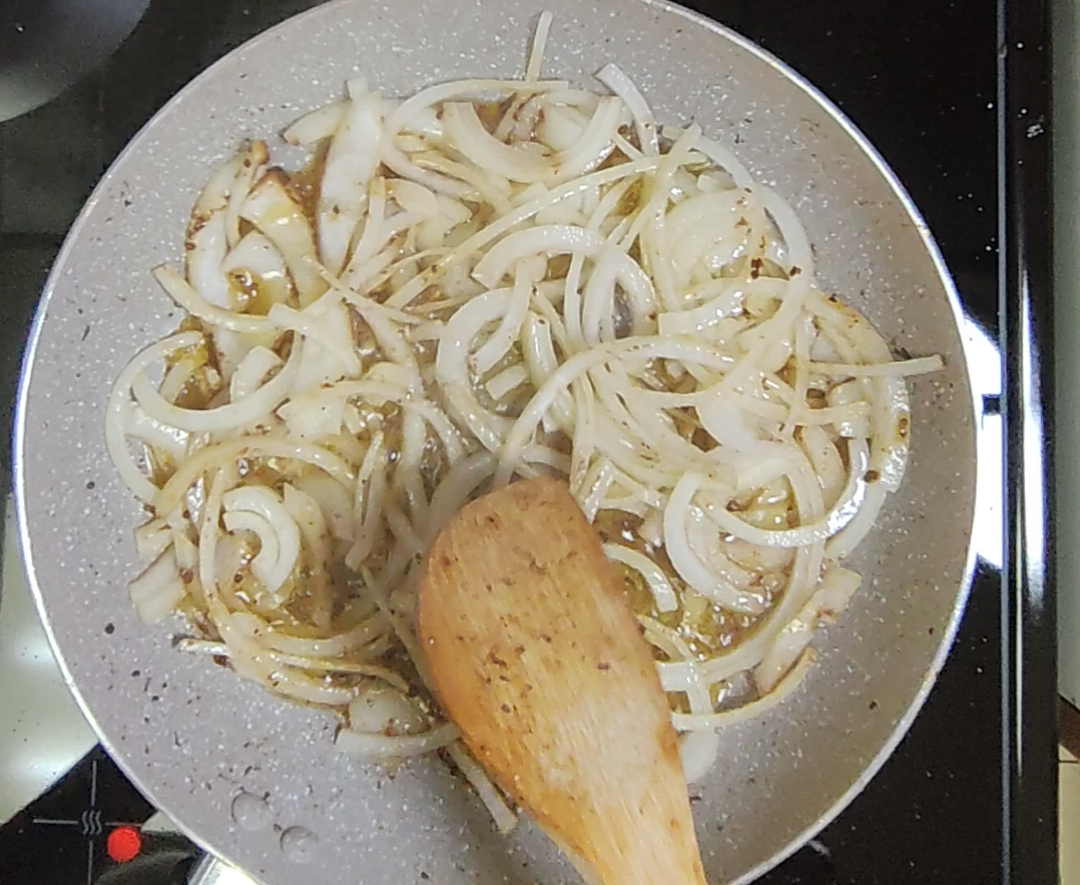
Softened vs Browned Onions
Softened and browned onions aren't the same thing, and recipes usually mean one or the other.
- Softened onions: tender and less sharp. They make a useful base for lots of dishes.
- Browned onions: cooked further, so they develop more colour and a deeper cooked flavour.
How to Caramelise Onions
Properly caramelised onions need patience. Cranking up the heat until the onions go dark isn't the same thing.
- 01
Slice the onions
Slices work well because they soften and reduce evenly.
- 02
Cook slowly
Cook them over low to medium-low heat with a little fat.
- 03
Stir now and then
Stir periodically and let them gradually soften, reduce and deepen in colour.
Caramelising takes considerably longer than a simple sauté, and the time varies with the pan, the heat and the amount of onion. You don't need to add sugar. Dark, burnt edges aren't a sign of caramelisation either; you're after onions that are soft, reduced and evenly deep in colour.
Air Frying Onions
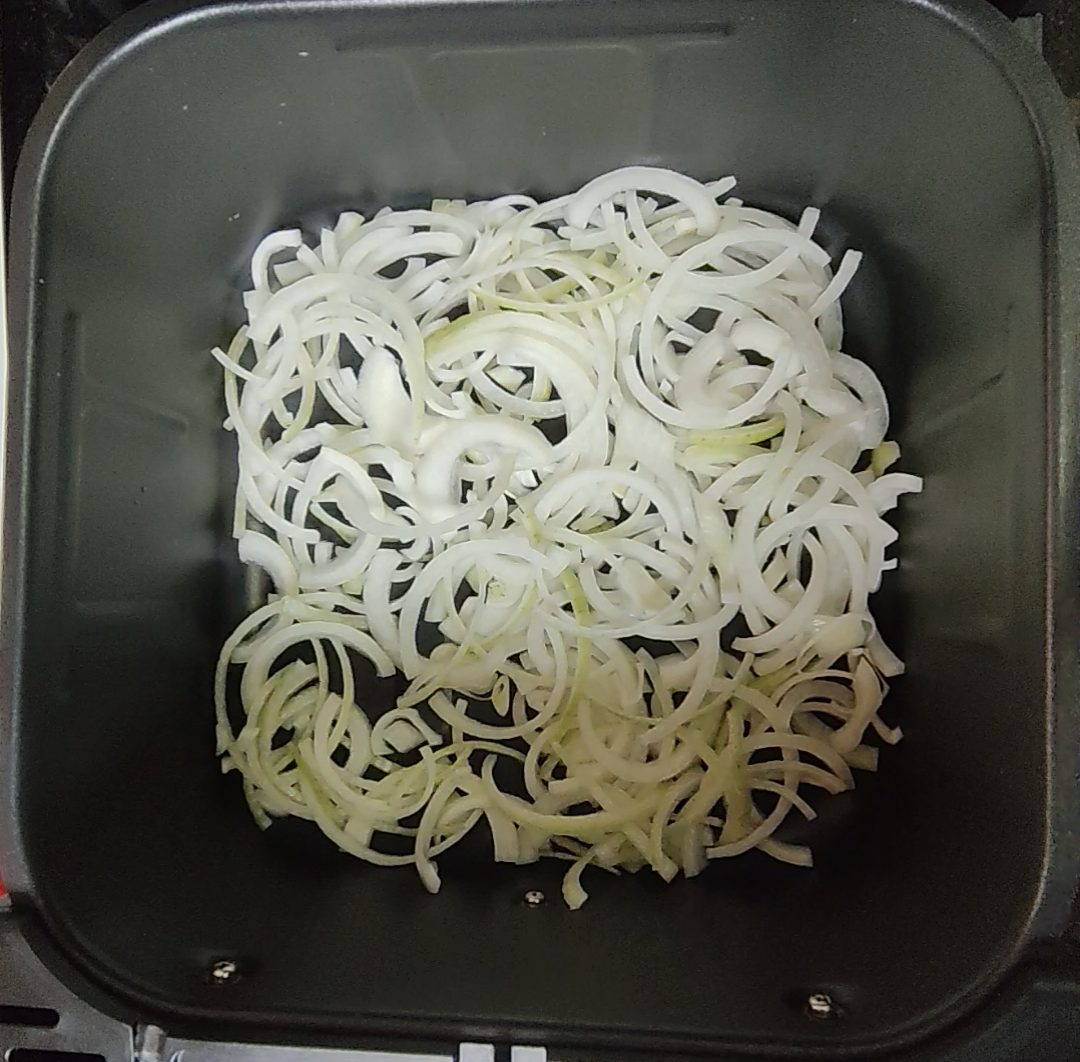
Sliced onions can also be cooked in the air fryer, and I've done this myself. These are my raw sliced onions spread out in the basket before cooking.
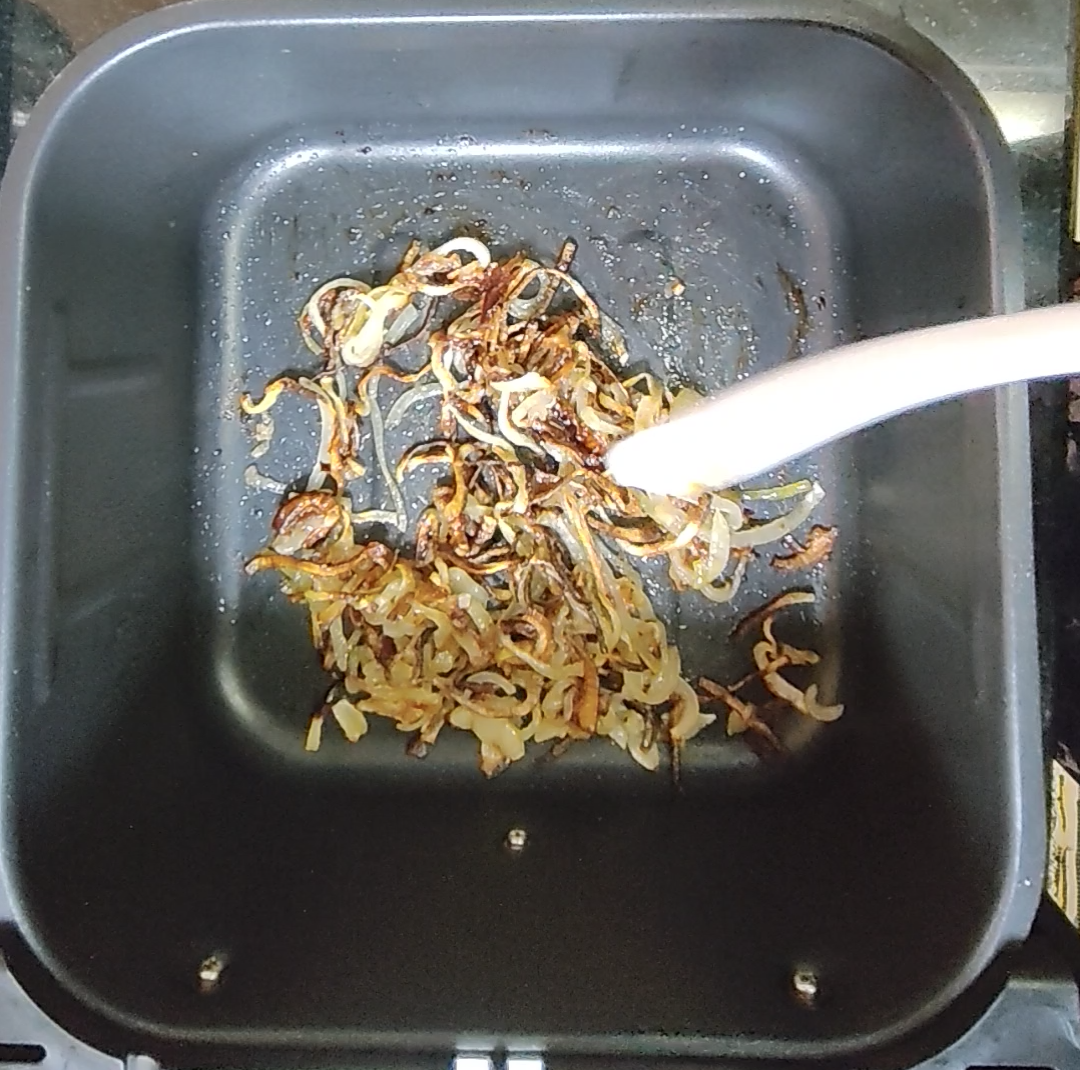
As they cooked, the onions reduced, browned and developed crisp-looking darker edges.
Air fryer results vary with the machine, the amount of onion, how thickly it's sliced and the temperature, so check your onions during cooking rather than relying on a fixed time.
Air fried onions also finish my Rocca Salad with Caramelised Onions, where I explain how I cooked them for that recipe.
Raw, Sautéed, Browned, Caramelised or Air Fried?
Each method gives you something different. The best choice is simply the one that suits your dish.
- Raw: crunchy and sharper.
- Sautéed: softer and gentler in flavour.
- Browned: more colour and a deeper cooked flavour.
- Caramelised: very soft, reduced and deeply developed after slow cooking.
- Air fried: can develop browned edges and a different texture without a frying pan.
How to Keep Onions from Burning
- Keep the heat right for the method you're using.
- Stir or check as needed.
- Remember that smaller or thinner pieces can cook faster.
- If the onions are browning much faster than you want, turn the heat down.
- In the air fryer, check on them as they cook, because air fryers vary.
Nutrition and What Onions Provide
Onions contribute nutrients and naturally occurring plant compounds as part of a varied diet.
If you'd like detailed figures for a particular type of onion, raw or cooked, USDA FoodData Central lists nutrient data for onions.
Source: USDA, FoodData Central
Storing Onions
Keep whole dry onions in a cool, dry, dark or shaded and well-ventilated place. The fridge isn't the usual place for whole dry storage onions.
Once cut, store onions covered or in a sealed container in the fridge. Utah State University Extension notes that chopped or sliced onions can be refrigerated in sealed containers for up to seven days.
Chopped onion can also be frozen. Penn State Extension notes that frozen onions are best suited to cooked dishes such as soups, stews, casseroles and stir-fries.
Source: Utah State University Extension, Onion Health Management & Production; Penn State Extension, The Well-Preserved Onion
Lackie's Notes
Onions are one of those ingredients I reach for constantly, and the reason is simple: the same onion can behave so differently.
Left raw, it's crunchy and sharp. Softened, it's gentle. Browned, it's deeper. And from the air fryer, it comes out with those darker, crispier edges. Once you know which one your dish needs, onions get a lot easier.