Air Fryer Guides
How to Convert Oven Recipes to Air Fryer Recipes: A Beginner's Guide
Many oven recipes can be adapted for an air fryer, but the process involves more than simply reducing the temperature and setting a shorter timer.
Air fryers circulate hot air around food in a compact cooking space. This can help certain foods cook and brown faster than they would in a conventional oven.
However, the best adjustments depend on the original oven setting, the type and thickness of the food, the size of the portion and the air fryer being used.
This guide explains how to approach oven to air fryer conversions, with practical starting points and advice for checking results.
By Esther LackiePublished
Understanding the Difference Between an Oven and an Air Fryer
A conventional oven heats a much larger cooking space. A fan-assisted oven circulates hot air around that space, making it more similar to an air fryer than a conventional oven without a fan.
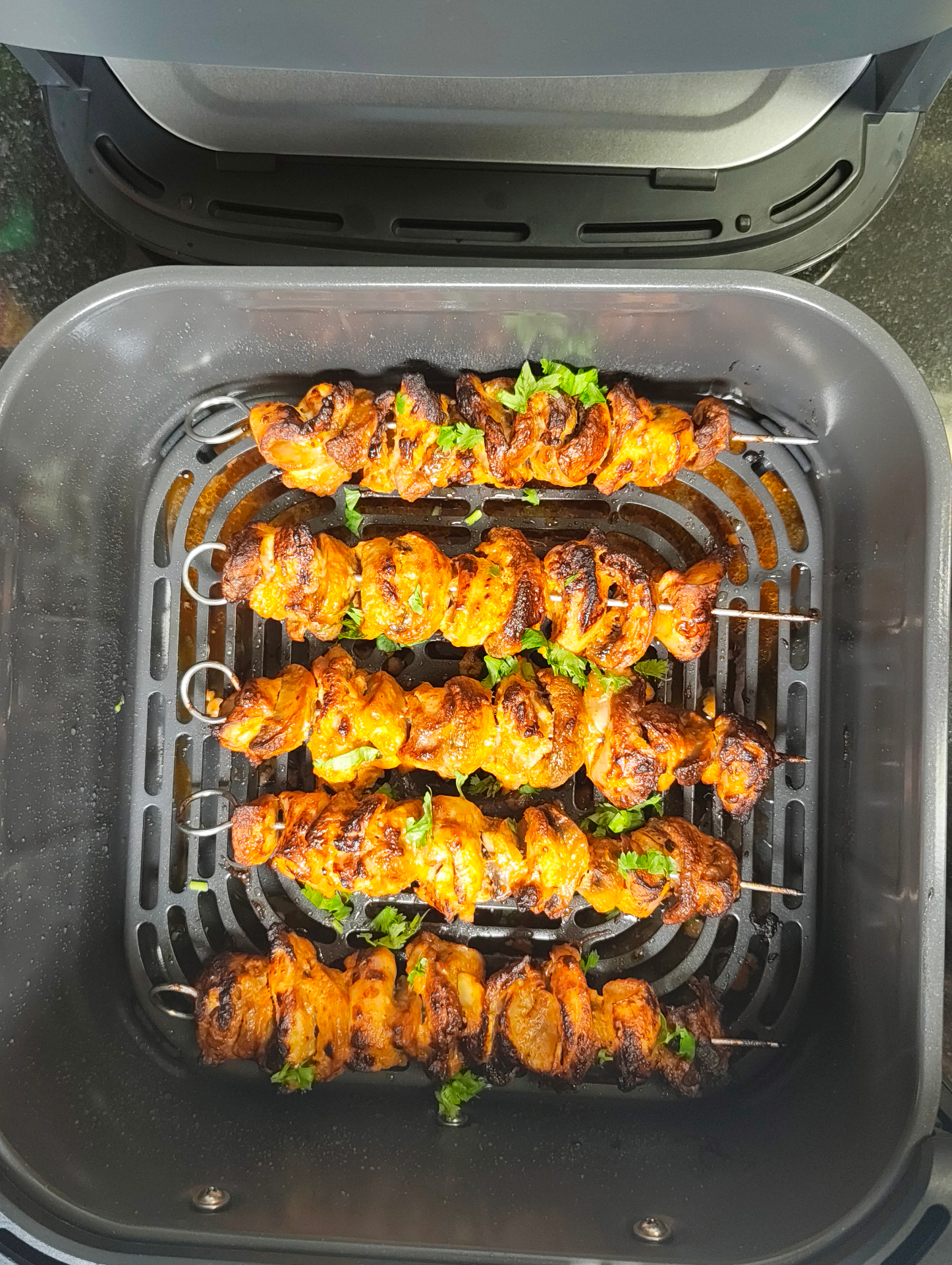
An air fryer combines circulating hot air with a smaller cooking chamber. Its concentrated airflow helps exposed surfaces brown, but the basket design and the way you arrange the food affect how well that air can move.
When comparing an air fryer vs a conventional oven, the appliance alone does not tell the whole story. Model, capacity, food quantity and the recipe all influence the result. Dense dishes, larger portions and food in deep containers do not necessarily cook faster.
Check the function as well as the temperature: Air Fryer Cooking Modes Explained: Air Fry, Bake, Roast and Reheat looks at how settings can differ between appliances.
Source: USDA Food Safety and Inspection Service, Air Fryers and Food Safety
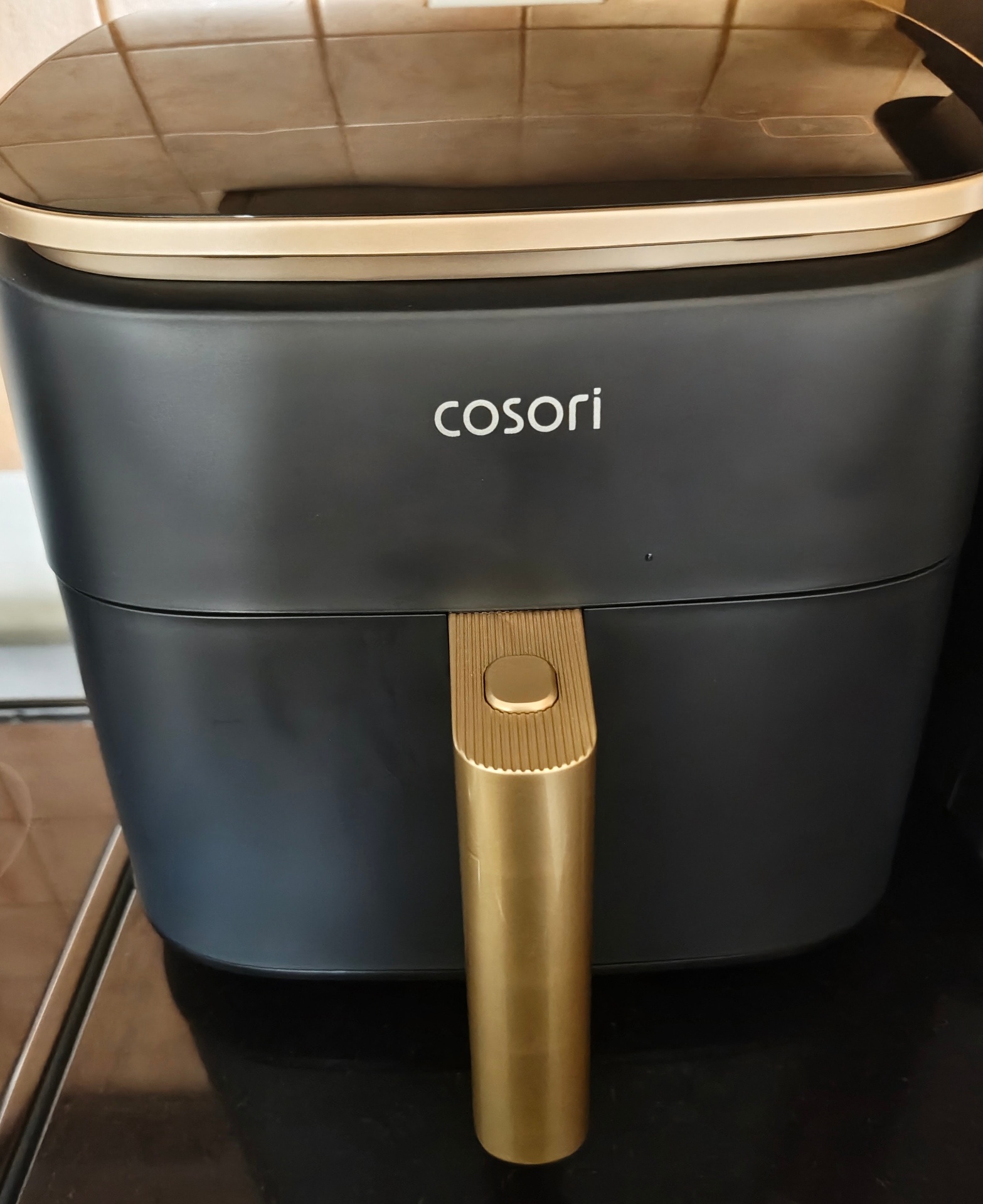
The Oven to Air Fryer Temperature Adjustment
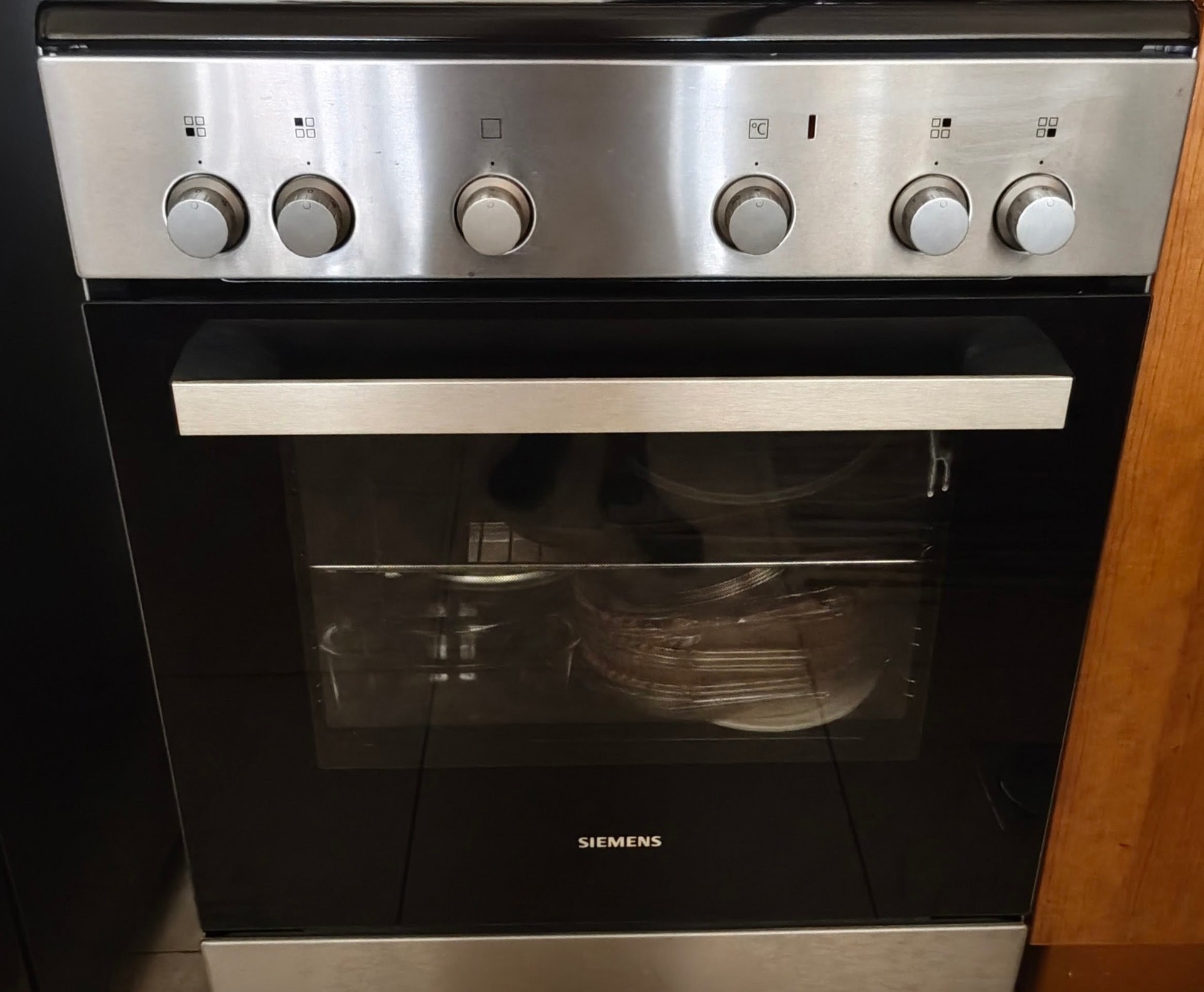
For a recipe written for a conventional oven, a commonly suggested starting point is to reduce the stated temperature by approximately 15–20°C. Treat this as a rough oven to air fryer temperature conversion, not a guaranteed formula.
Some foods work best at the same temperature; others need a different adjustment to balance browning and cooking through. If the recipe already gives a fan-assisted oven temperature, a further 20°C reduction may not be necessary.
Use the estimates below only to choose an initial setting. Consult your air fryer manual for recommended settings and maximum temperatures; if it cannot reach a listed setting, do not exceed its limits. Choose an available setting appropriate to the food and check the result.
For comparison, University of Illinois Extension suggests lowering a conventional oven recipe by 25–30°F (about 14–17°C) and reducing cooking time by 20%. That is another approximate starting approach, not a rule for every food or appliance.
| Original conventional oven temperature | Possible air fryer starting point |
|---|---|
| 160°C | 140–145°C |
| 180°C | 160–165°C |
| 200°C | 180–185°C |
| 220°C | 200–205°C |
- 160°C
- Possible air fryer starting point: 140–145°C
- 180°C
- Possible air fryer starting point: 160–165°C
- 200°C
- Possible air fryer starting point: 180–185°C
- 220°C
- Possible air fryer starting point: 200–205°C
Illustrative starting estimates for conventional oven recipes, not universal cooking instructions. These are not tested Lackie Flavors cooking results.
How to Adjust Cooking Time
Air fryer cooking may take less time than conventional oven cooking. For many suitable foods, a practical first approach is to begin checking around 20–25% earlier than the original oven recipe suggests. That is a checking point, not a guaranteed finished cooking time.
For a hypothetical oven recipe calling for 30 minutes, you could begin checking from approximately 22–24 minutes when first adapting it for an air fryer. The food may need additional cooking time; this is an illustration, not a personally tested recipe or a promise.
Thickness, starting temperature, container material and quantity all influence oven to air fryer cooking times. A large or dense dish may need the same time as in the oven, or longer. Keep cooking until the food reaches the appropriate doneness, regardless of the timer.
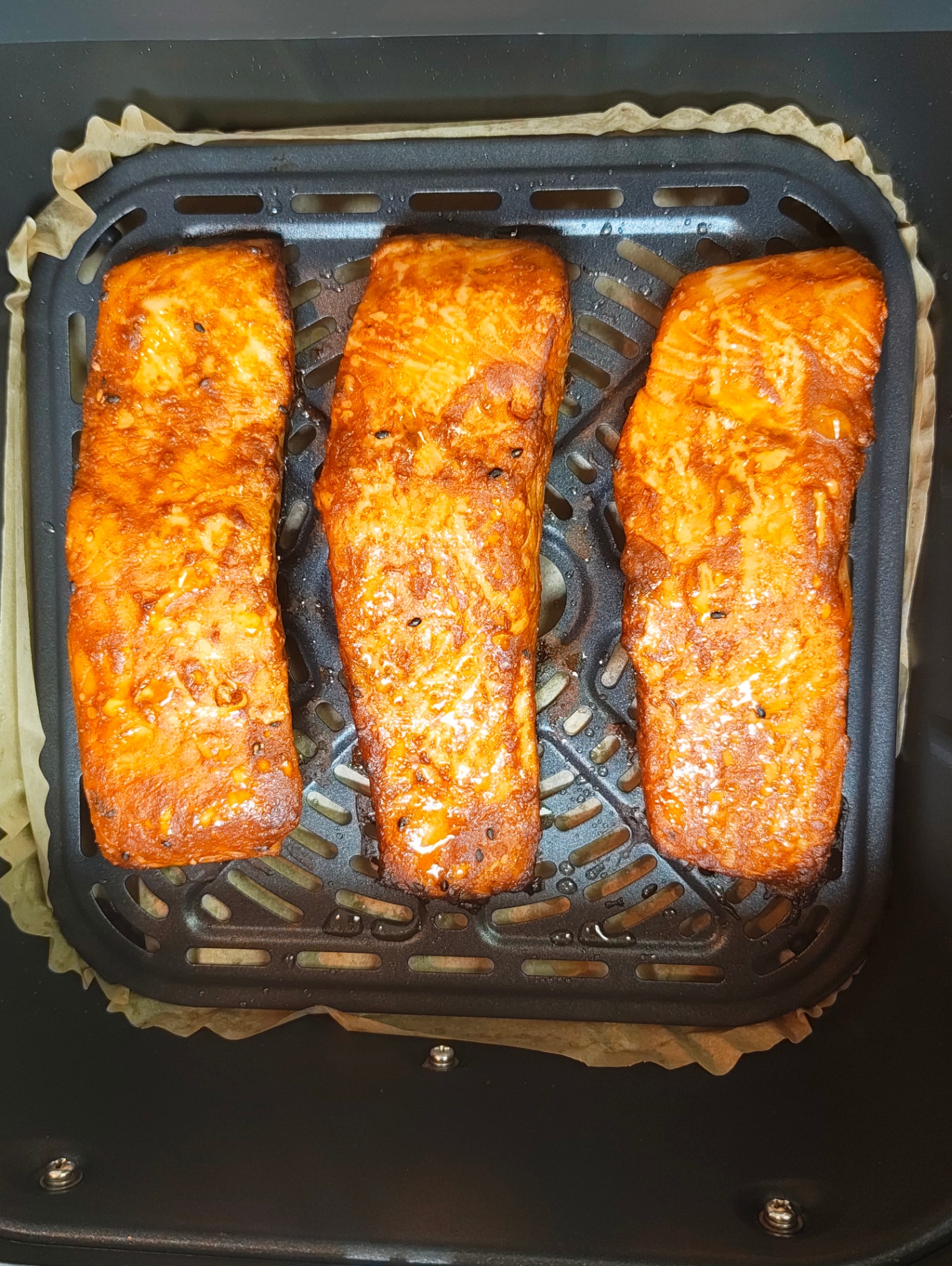
Conventional Oven vs Fan Oven Settings
A conventional oven temperature usually refers to cooking without fan assistance. A fan oven temperature refers to cooking with circulating air and is often lower in recipes that give both options. An air fryer setting belongs to a different appliance with its own airflow, chamber size and controls.
Read the original recipe carefully before making an adjustment. For example, a recipe might give 200°C conventional and 180°C fan: those are two alternatives, not two steps to subtract in sequence.
Do not automatically apply another 20°C reduction to a temperature already written for fan cooking. A fan oven setting can be a useful starting reference, but fan oven and air fryer temperatures are not universally interchangeable. Follow any appliance-specific guidance and check the food.
Foods That Often Adapt Well
Smaller pieces with exposed surfaces often suit air frying. The following are food types to consider, not fixed temperature or timing recommendations.
The linked Lackie Flavors recipes are examples of foods cooked in air fryers. They are not evidence that Esther converted those recipes from oven cooking.
- Roasted vegetables: smaller, evenly sized pieces can brown well. Leave space for airflow and check both tenderness and surface colour.
- Potato wedges and similar potato dishes: exposed edges can crisp, but thick pieces still need time to become tender inside. Avoid piling too many into the basket.
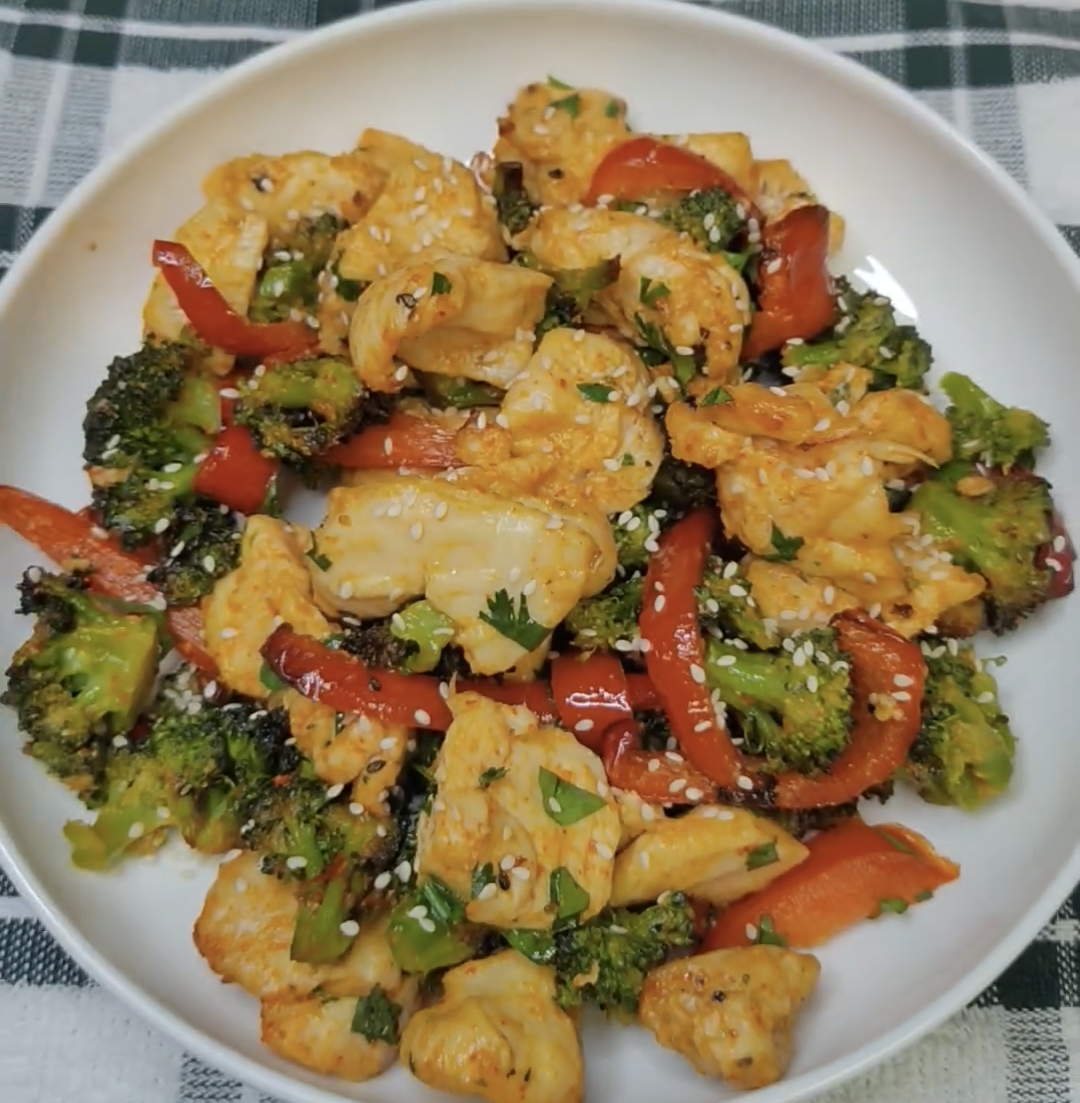
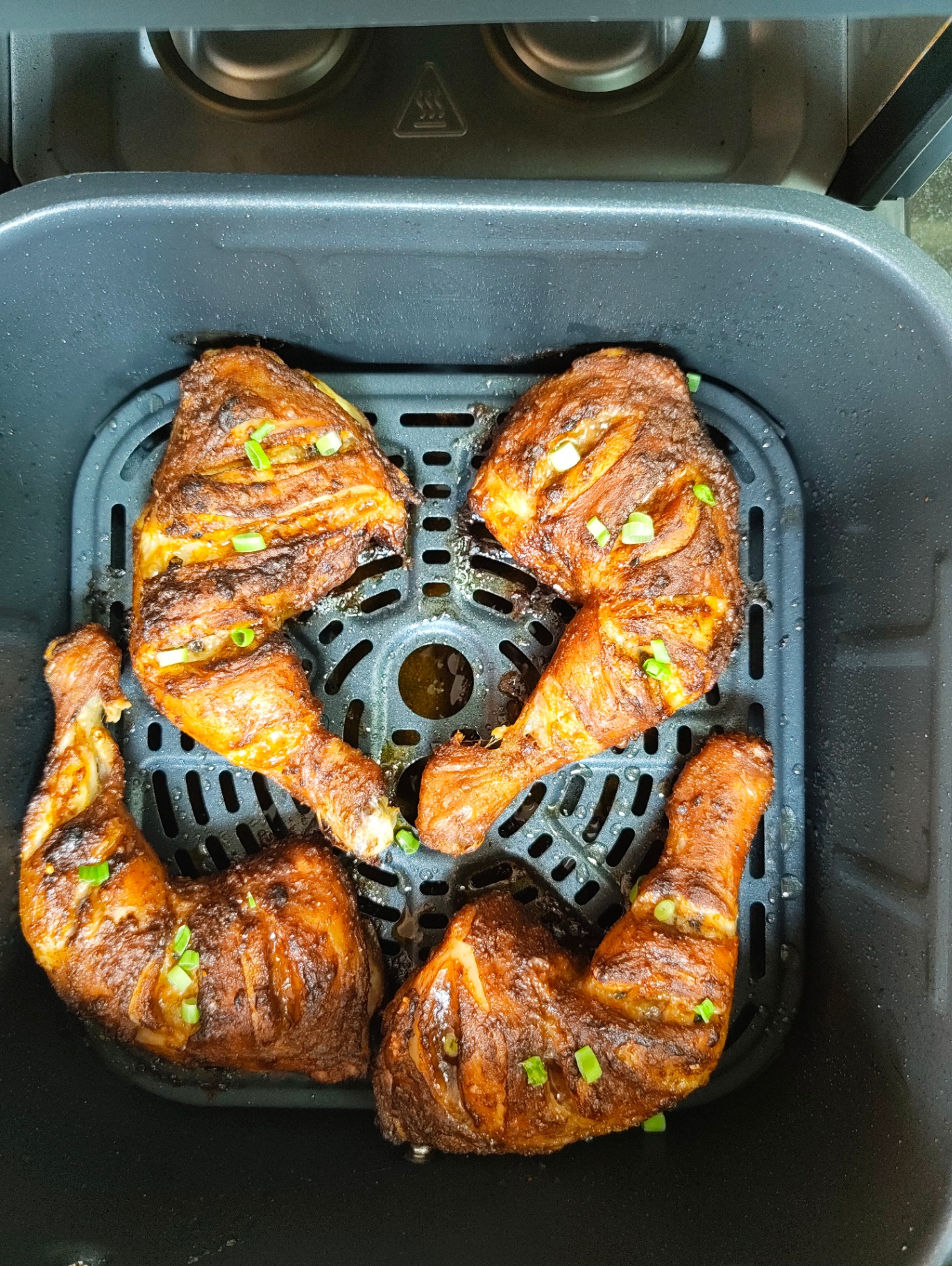
- Chicken portions: their manageable size can suit a basket, but thickness and safe internal temperature matter more than browned skin. Air Fryer Chicken and Broccoli Bowl is an existing example of chicken cooked in an air fryer.
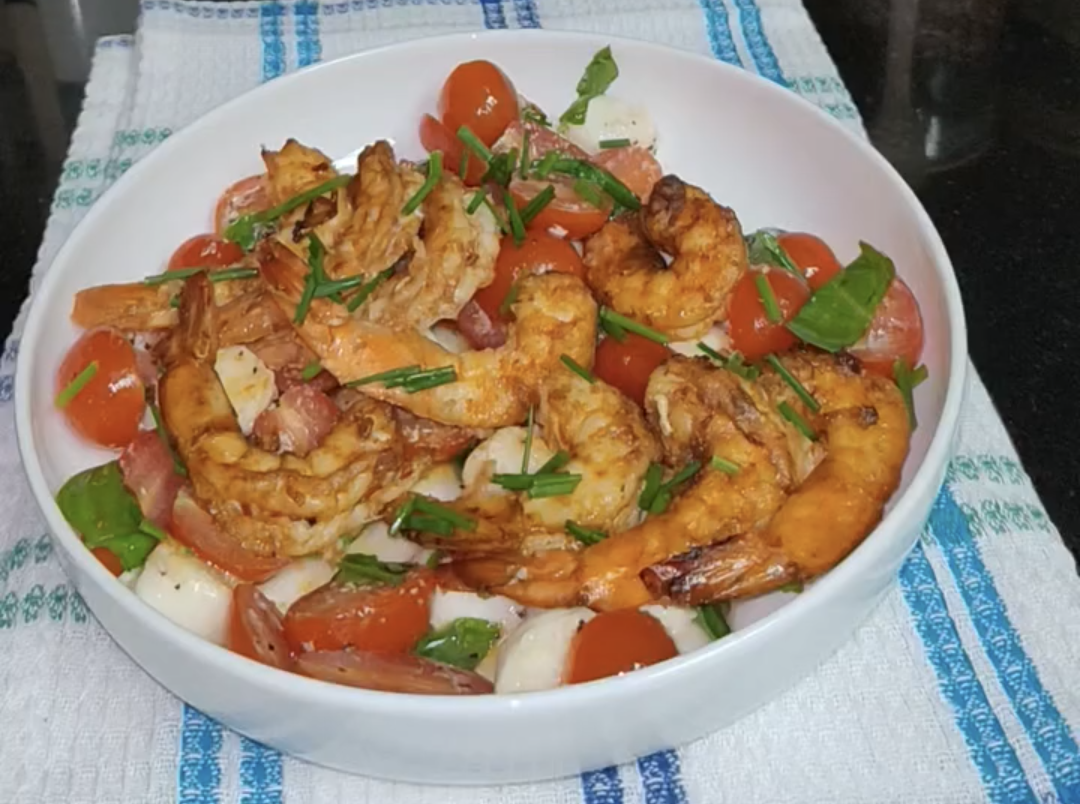
- Fish fillets: smaller portions can cook readily, but delicate flesh can dry out if left too long. Check carefully rather than treating browning as the only cue. Easy Air Fryer Shrimp and Air Fryer Whole Sea Bass with Fresh Kachumbari are other seafood examples, although whole fish needs particular attention to size and thickness.
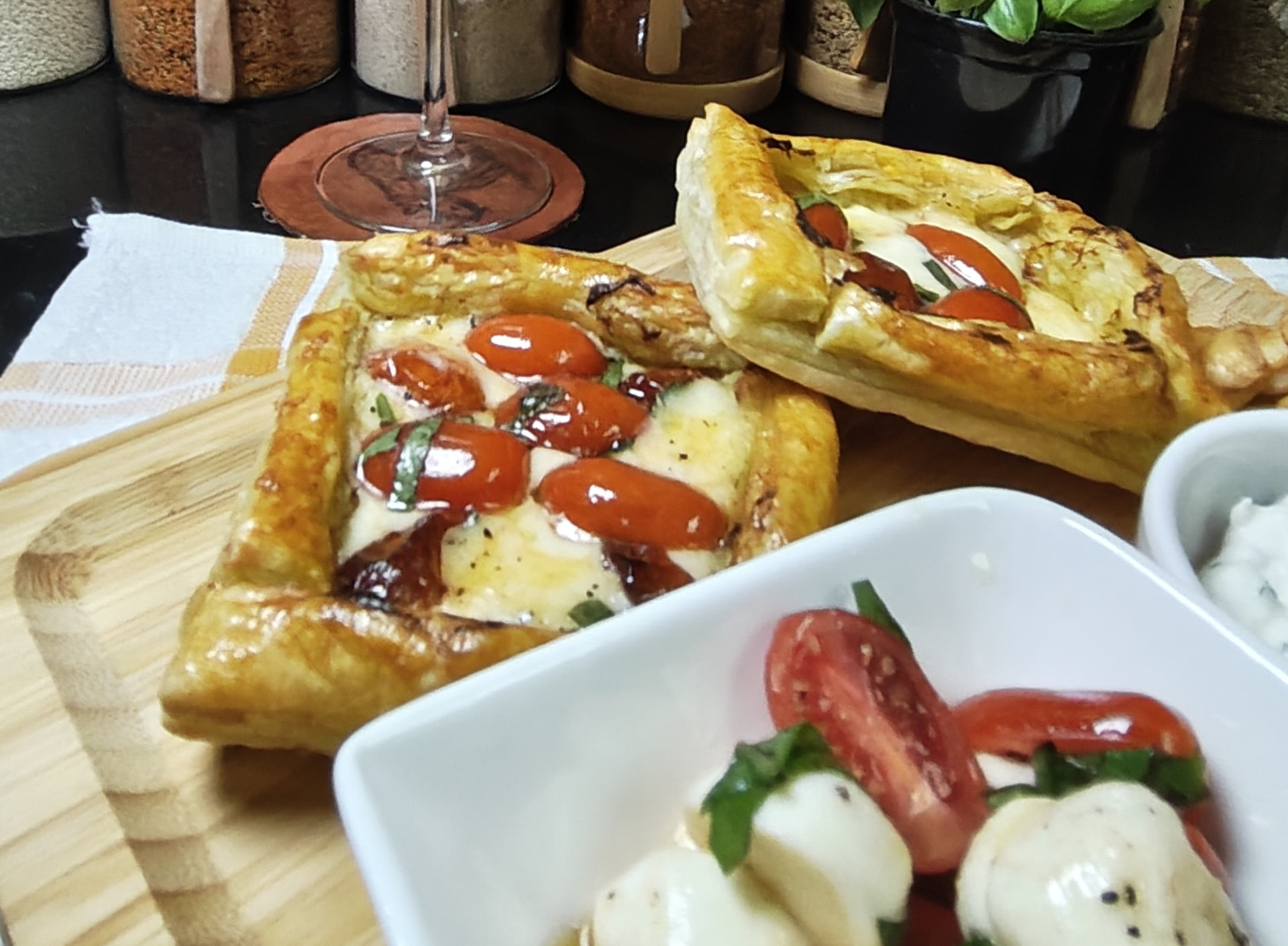
- Puff pastry snacks: circulating heat can brown small pastries well, but the pastry may colour before the filling is ready. Air Fryer Pesto, Tomato & Mozzarella Puff Pastries and Air Fryer Mini Sausage Pastries show this type of air fryer cooking.
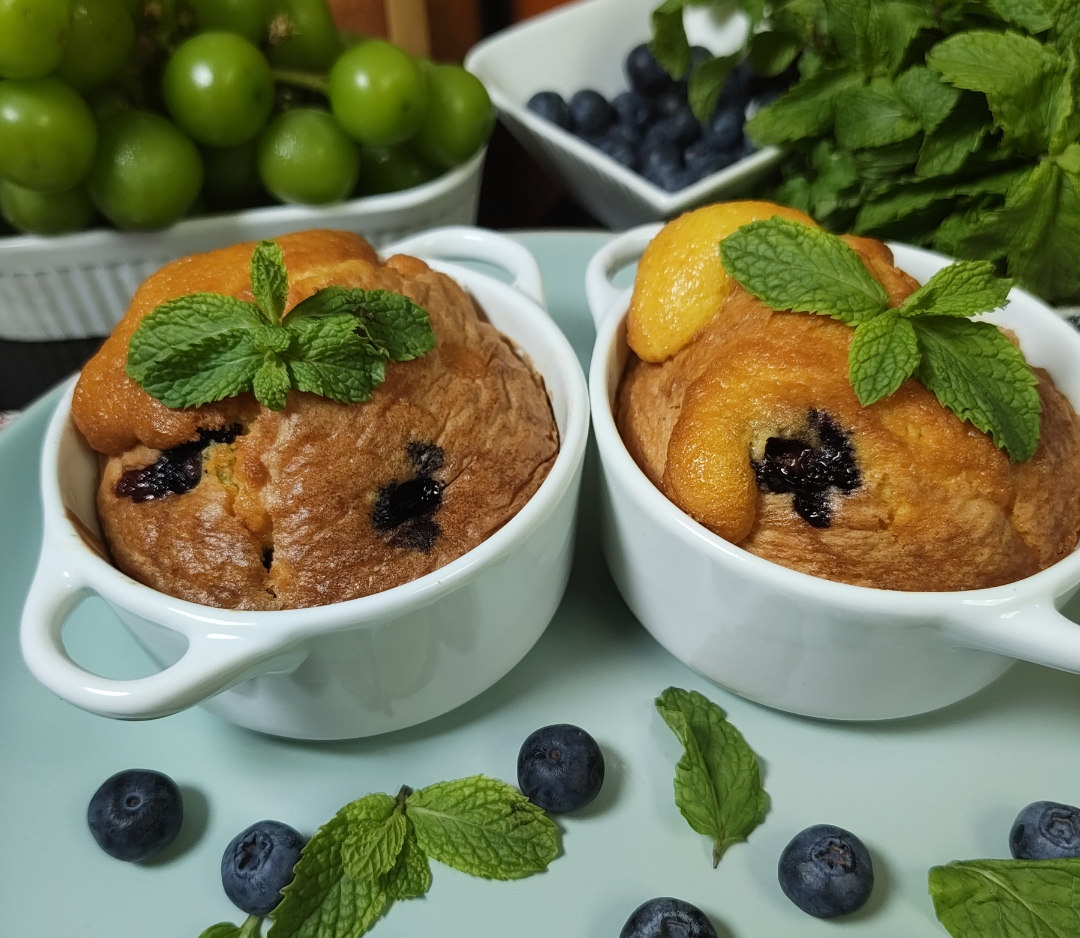
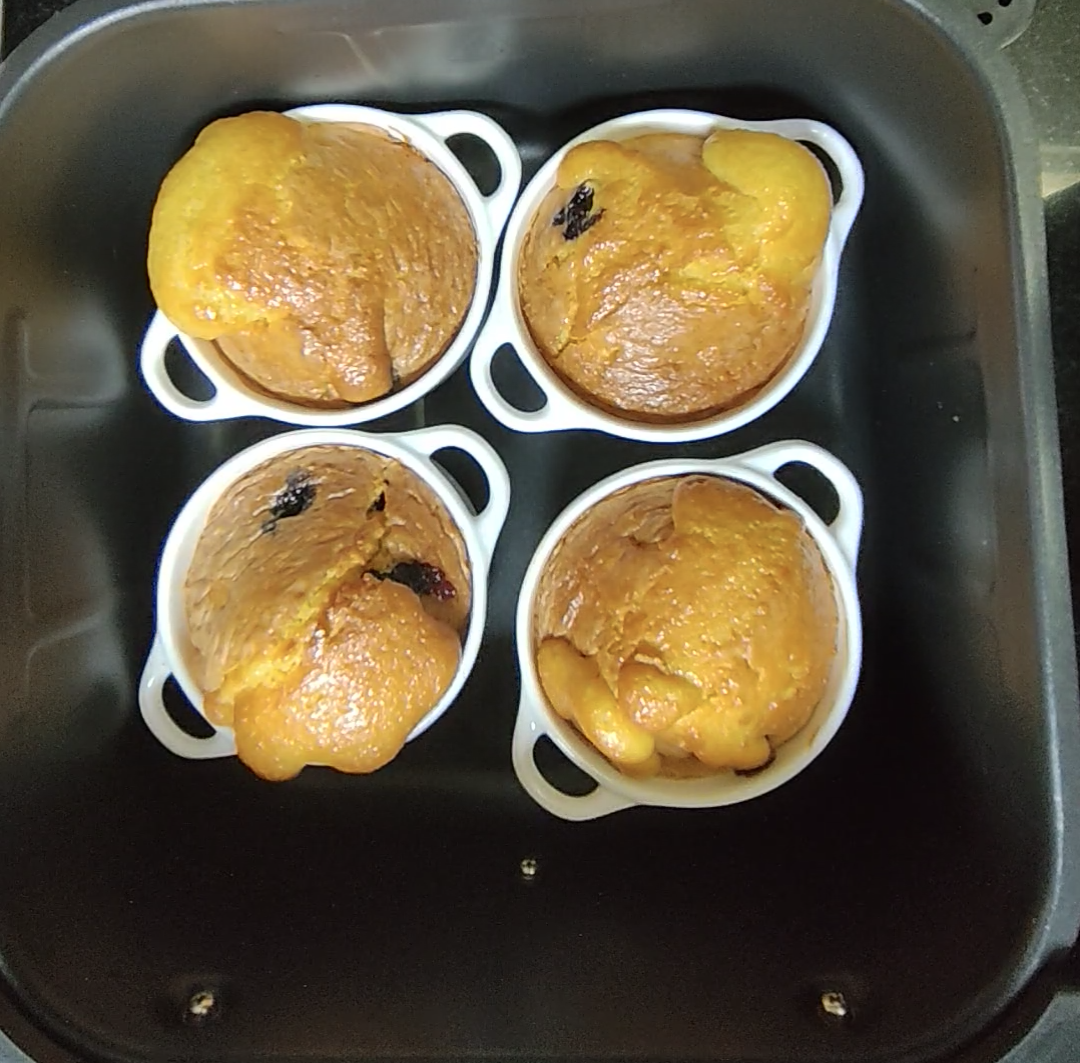
- Small baked goods: suitably sized tins or moulds can make baking possible, but tin size, rapid top browning and centre doneness need attention. Air Fryer Baking Guide for Beginners explains these considerations in more detail.
- Reheating certain oven-baked foods: small portions of suitable cooked foods may regain some surface crispness. Avoid drying them out and follow recognised guidance for reheating leftovers safely; USDA recommends 74°C / 165°F for leftovers.
Source: USDA Food Safety and Inspection Service, Air Fryers and Food Safety; USDA Food Safety and Inspection Service, Safe Minimum Internal Temperature Chart
Foods That Need Extra Care
Not every oven dish suits a direct conversion. Some need a different container, smaller portions, different preparation or another cooking method altogether.
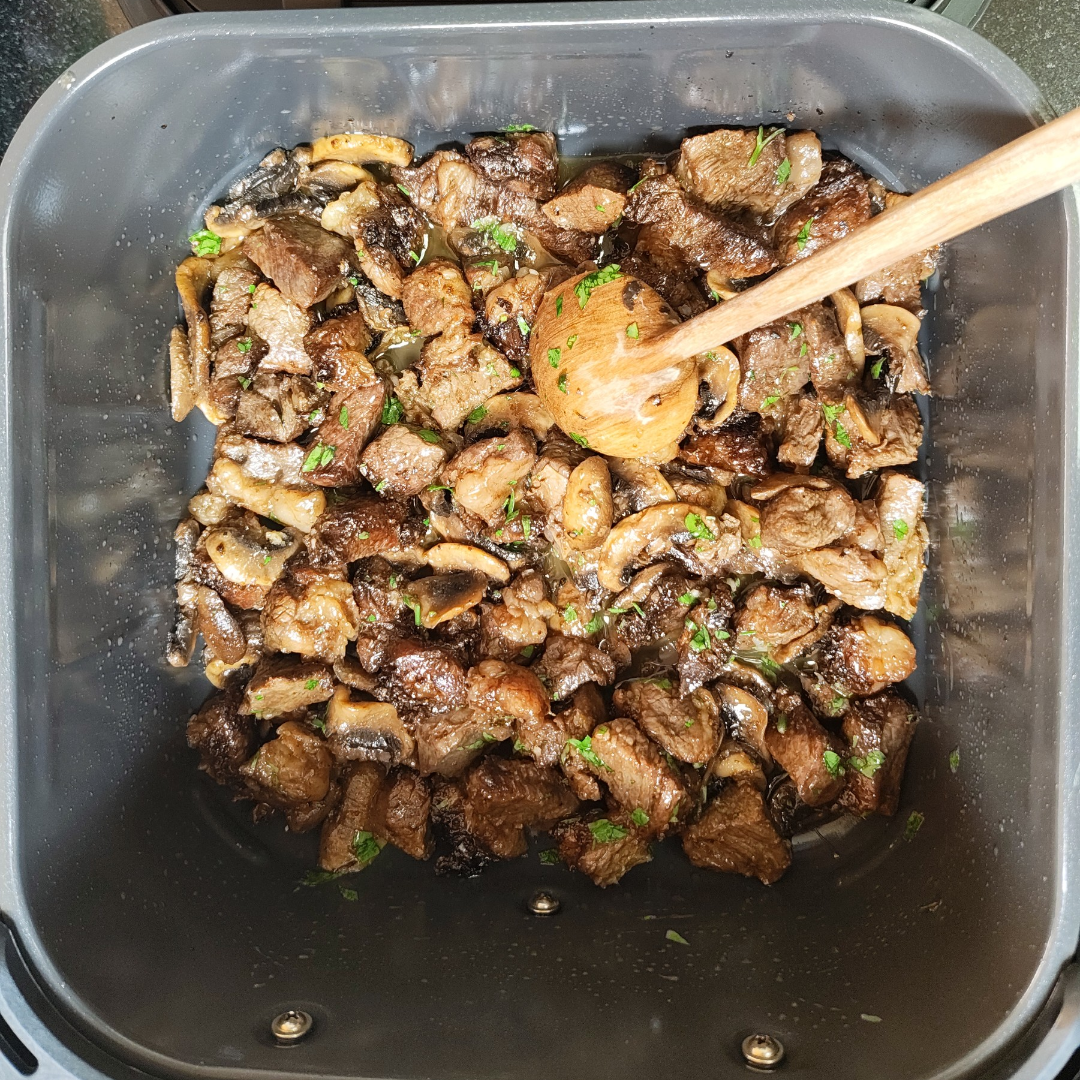
Dishes that release cooking juices or use butter-based sauces, such as Air Fryer Umami Butter Beef & Mushrooms, behave differently from exposed foods and need checking as they cook rather than a fixed converted time.
- Very large roasts or oversized poultry may not fit with sufficient clearance and can brown outside before the centre is safely cooked.
- Deep casseroles put much of the food away from the moving air. Their centres may heat slowly even when the top looks ready.
- Dishes with a large volume of liquid need suitable cookware and can spill or behave differently from exposed foods. Do not pour cooking liquids into the basket as a substitute for a pot.
- Delicate cakes and breads can develop a browned top before the centre is set, especially in a deep tin.
- Loose wet batter can drip through a basket before it sets. Do not put wet-battered food directly into the basket; use a suitable recipe and method instead.
- Recipes relying on steam or slow braising need moisture and cooking conditions that a direct air fryer conversion may not provide.
Source: USDA Food Safety and Inspection Service, Air Fryers and Food Safety
Cookware and Portion Sizes
Air fryer baskets are generally smaller than oven trays, so a recipe may need dividing into smaller portions or batches. Overcrowding reduces airflow and can cause uneven cooking. Reducing the amount of food does not automatically give you an exact new cooking time.
Containers also change cooking behaviour. A deep dish can slow heating at the centre, while the material and shape affect heat transfer. Leave the clearance specified by the appliance manufacturer around cookware and beneath the heating elements.
Oven-safe does not automatically mean suitable for every air fryer. Glass, silicone, ceramic and metal cookware must be rated for the intended temperature and compatible with the particular appliance. Follow both the appliance and cookware manufacturers' instructions. What Containers Can You Put in an Air Fryer? explains the checks to make.
If you use a liner, it must not obstruct airflow or come into contact with the heating element. Can You Use Air Fryer Liners? covers placement and appliance-specific precautions.
Source: USDA Food Safety and Inspection Service, Air Fryers and Food Safety
Should You Preheat?
Preheating depends on the appliance, food and cooking method. Some recipes and appliances benefit from it; others do not require it. Follow your manual and the needs of the particular recipe rather than assuming one approach suits every conversion.
Do You Need to Preheat an Air Fryer? explains the differences. There is no universal preheating step to add to every oven recipe.
How to Tell When Food Is Ready
Timing estimates are only a starting point. Look for appropriate browning, test vegetables for tenderness and check that baked goods are set in the centre. Pastry fillings need to be thoroughly heated, while seafood needs careful checking to avoid drying it out.
For meat, poultry and seafood, appearance alone does not reliably establish safe doneness. Use a food thermometer in the thickest part, away from bone, and follow applicable local food safety guidance. The USDA minimum internal temperatures below are a useful reference; they are safety guidance, not a claim that Esther measured temperatures in the linked recipes.
- Poultry, including ground chicken and turkey: 74°C / 165°F.
- Ground beef, pork, lamb and veal: 71°C / 160°F. Ground poultry needs 74°C / 165°F instead.
- Fish: 63°C / 145°F, or applicable recognised local food safety guidance.
Source: USDA Food Safety and Inspection Service, Safe Minimum Internal Temperature Chart; USDA Food Safety and Inspection Service, Food Thermometers
Common Conversion Mistakes
These mistakes concern adapting oven recipes specifically. For wider everyday issues, see Common Air Fryer Mistakes (And How to Avoid Them); Why Is My Air Fryer Food Not Crispy? looks more closely at airflow, moisture and texture.
- Reducing the temperature too much: choose a modest initial adjustment rather than repeatedly subtracting degrees. Very low heat may not give the intended texture.
- Assuming every dish cooks 25% faster: check earlier, but allow extra cooking time whenever the centre is not ready.
- Forgetting that fan oven temperatures are already adjusted: identify which oven setting the recipe gives before changing it.
- Overcrowding the basket: divide the recipe into batches so air can circulate.
- Using oversized or unsuitable cookware: check temperature ratings, compatibility and clearance before cooking.
- Checking only the surface: assess the centre too and use a thermometer where safe internal temperature matters.
- Assuming one cooking time works for every air fryer: model, food quantity and starting temperature can change the result.
- Applying the same conversion to baking, roasting and casseroles: exposed vegetables, a cake in a tin and a deep wet dish do not cook in the same way.
Quick Oven to Air Fryer Conversion Checklist
- 01
Identify the oven setting
Check whether the original recipe uses a conventional or fan oven temperature.
- 02
Check the food is suitable
Consider its size, thickness, moisture and cooking method. What Not to Cook in an Air Fryer (And What to Do Instead) can help with unsuitable foods.
- 03
Choose a starting temperature
Use a reasonable estimate, not a fixed conversion rule, and stay within your appliance's limits.
- 04
Adjust portions and cookware
Divide the recipe if needed and choose compatible cookware with suitable clearance.
- 05
Leave room for airflow
Avoid overcrowding and follow the manufacturer's loading advice.
- 06
Start checking earlier
Begin checking before the original oven cooking time ends; the food may still need longer.
- 07
Confirm proper doneness
Check the centre, texture and appropriate safe internal temperature rather than relying only on colour.
- 08
Learn from the actual result
Note what worked and adjust the next attempt for your appliance and portion size.
Frequently Asked Questions
Can every oven recipe be cooked in an air fryer?
No. Oversized foods, deep liquid-heavy dishes, loose wet batter and recipes relying on steam or slow braising may need a different method. Check suitability before adjusting the temperature.
Do I always need to reduce oven temperature by 20°C?
No. Approximately 15–20°C lower is a rough starting point for some conventional oven recipes, not a universal rule. Fan oven recipes may not need that additional reduction.
Should I cut oven cooking time in half?
Not as a general rule. For many suitable foods, begin checking around 20–25% earlier, then keep cooking as necessary. Large or dense dishes may take as long as in the oven, or longer.
Are fan oven and air fryer temperatures the same?
Not necessarily. Both use circulating air, but chamber size and airflow differ. A fan oven temperature can be a starting reference, not a guarantee of the same result.
Can I use my regular oven baking tin in an air fryer?
Only if its material and temperature rating are suitable, it fits with the required clearance and both manufacturers allow that use. Oven-safe alone does not establish air fryer compatibility.
Why is my food browned outside but not cooked inside?
The surface can brown faster than heat reaches the centre, especially with thick food, deep tins or a crowded basket. Reconsider temperature, portion size and cookware, and continue cooking until the centre is properly done.
Do I need to preheat when adapting an oven recipe?
It depends on the appliance and recipe. Follow the manual and any suitable recipe guidance rather than adding preheating automatically.
A Thoughtful Starting Point, Not a Fixed Formula
Converting an oven recipe for an air fryer is about understanding the food, making sensible adjustments and checking the results as you cook.
Start with a suitable recipe, adjust the temperature thoughtfully and check for doneness earlier rather than relying on a fixed conversion formula.
With a little practice, adapting familiar oven favourites becomes much easier.