Ingredient Guides
Eggs: A Practical Guide to Buying, Storing and Cooking Eggs
Eggs are one of those ingredients I almost always have in the kitchen. They can become breakfast in minutes, turn simple ingredients into a meal, add richness to baking and cooking, or simply be cooked and kept ready for when you need something quick.
But for such a simple ingredient, there are plenty of questions around eggs. What do the different sizes mean? How should you store them? How can you tell whether they are still fresh? And why does one cooking method give you a runny yolk while another produces a completely firm one?
This guide covers the basics of buying, storing and cooking eggs, along with a few practical things worth knowing in the kitchen.
By Esther LackiePublished
Understanding Egg Sizes
Eggs are commonly sold in different sizes, and the exact classifications can vary depending on where you live.
For everyday dishes such as fried, scrambled or boiled eggs, a small difference in size may not always be critical. In baking, however, egg size can matter because changing the amount of egg can affect the balance of a recipe.
If a baking recipe specifies a particular egg size, it is worth following the recipe rather than assuming every egg will produce exactly the same result.
How to Choose Eggs
When buying eggs, check that the shells are intact and avoid cartons containing cracked eggs. US food safety guidance advises against buying cracked eggs, because bacteria can enter through cracks in the shell.
Check the date information and storage instructions on the carton as well.
Egg handling and storage practices can differ between countries, so the instructions provided with the eggs you buy and the food safety guidance where you live are important.
Source: U.S. Food and Drug Administration, What You Need to Know About Egg Safety; USDA Food Safety and Inspection Service, Is it safe to use eggs that have cracks?
How to Store Eggs
How eggs should be stored can depend partly on how they have been processed and sold in your country, so follow the storage instructions on the packaging and the food safety guidance where you live.
For eggs sold refrigerated, keep them refrigerated. Keeping refrigerated eggs in their original carton also protects them and keeps useful date information close at hand.
In the US, the FDA recommends storing refrigerated shell eggs promptly in a refrigerator at 40°F (approximately 4°C) or below, and keeping them in their original carton. That is US guidance, so check the advice that applies where you live.
Source: U.S. Food and Drug Administration, What You Need to Know About Egg Safety; U.S. Food and Drug Administration, Are You Storing Food Safely?
How Can You Tell if an Egg Is Fresh?
The date information on the carton is a useful first reference when judging the age and expected quality of eggs.
You may also have heard of putting an egg in water to see whether it sinks, stands upright or floats. Whatever the egg does in water, it is not proof that the egg is safe to eat. Food safety can't be judged simply by whether an egg sinks or floats.
Once an egg is cracked, if anything about its smell or appearance worries you, don't eat it.
Understanding the Different Parts of an Egg
The three parts most people notice straight away when cracking an egg are the shell, the white and the yolk.
The egg white contains proteins that change structure as the egg cooks, which is why the white turns from translucent to opaque and becomes firmer.
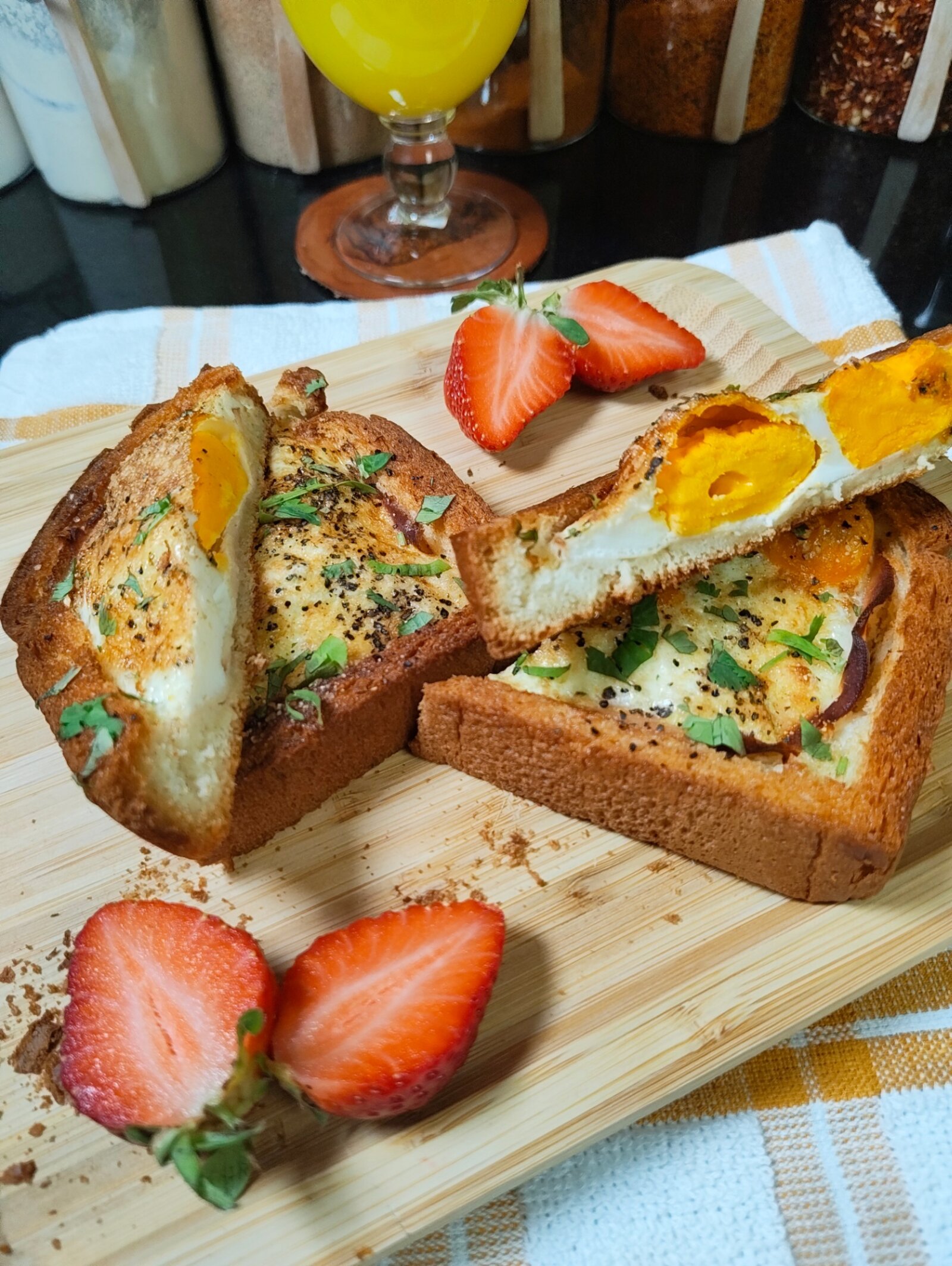
The yolk provides much of the richness we associate with eggs. It can stay runny, become softly set or cook completely firm, depending on the cooking method and how long it is cooked.
Ways to Cook Eggs
One of the best things about eggs is how many different ways you can prepare them. They can be:
- Fried
- Scrambled
- Boiled
- Poached
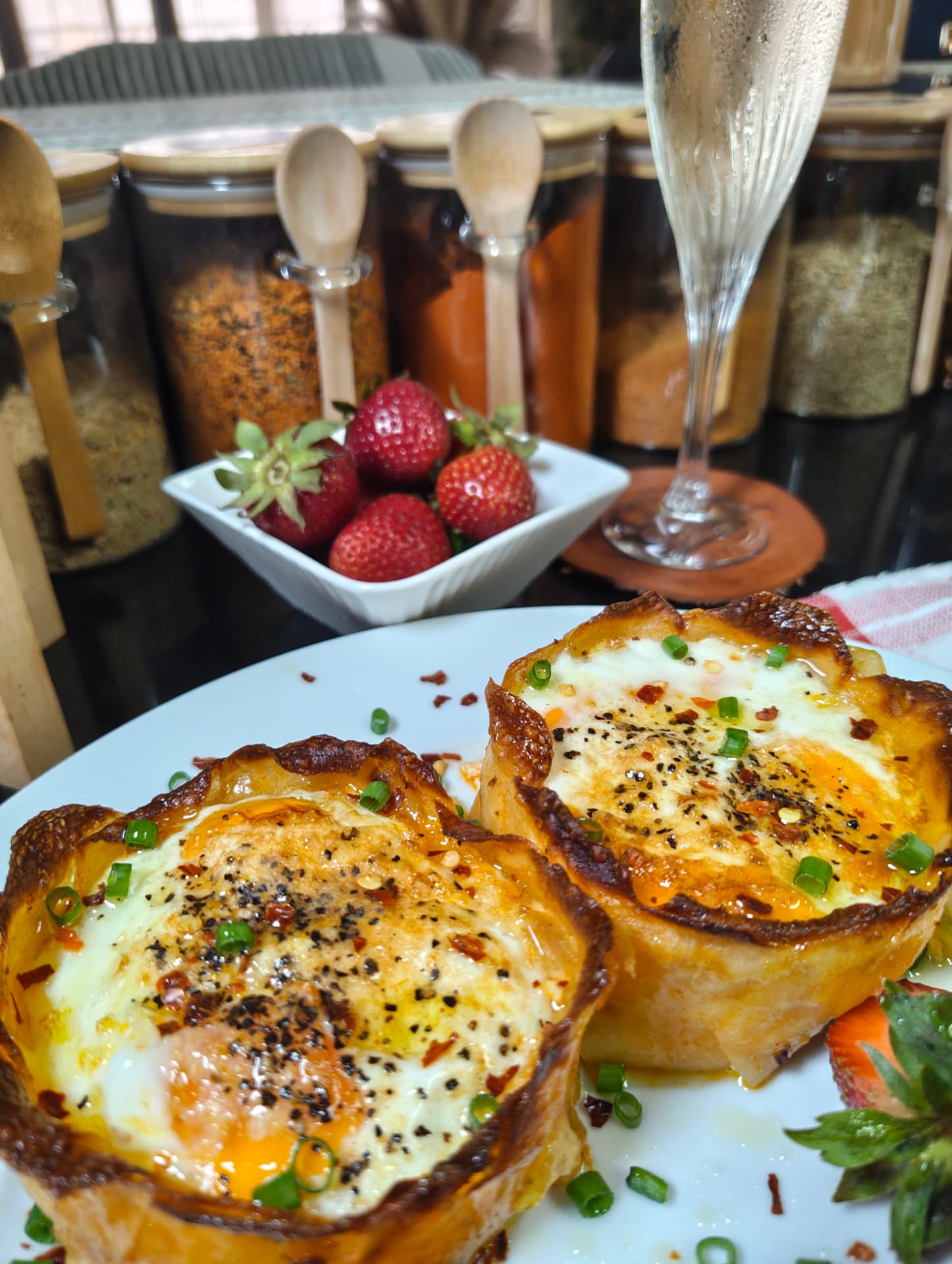
- Baked
- Made into omelettes
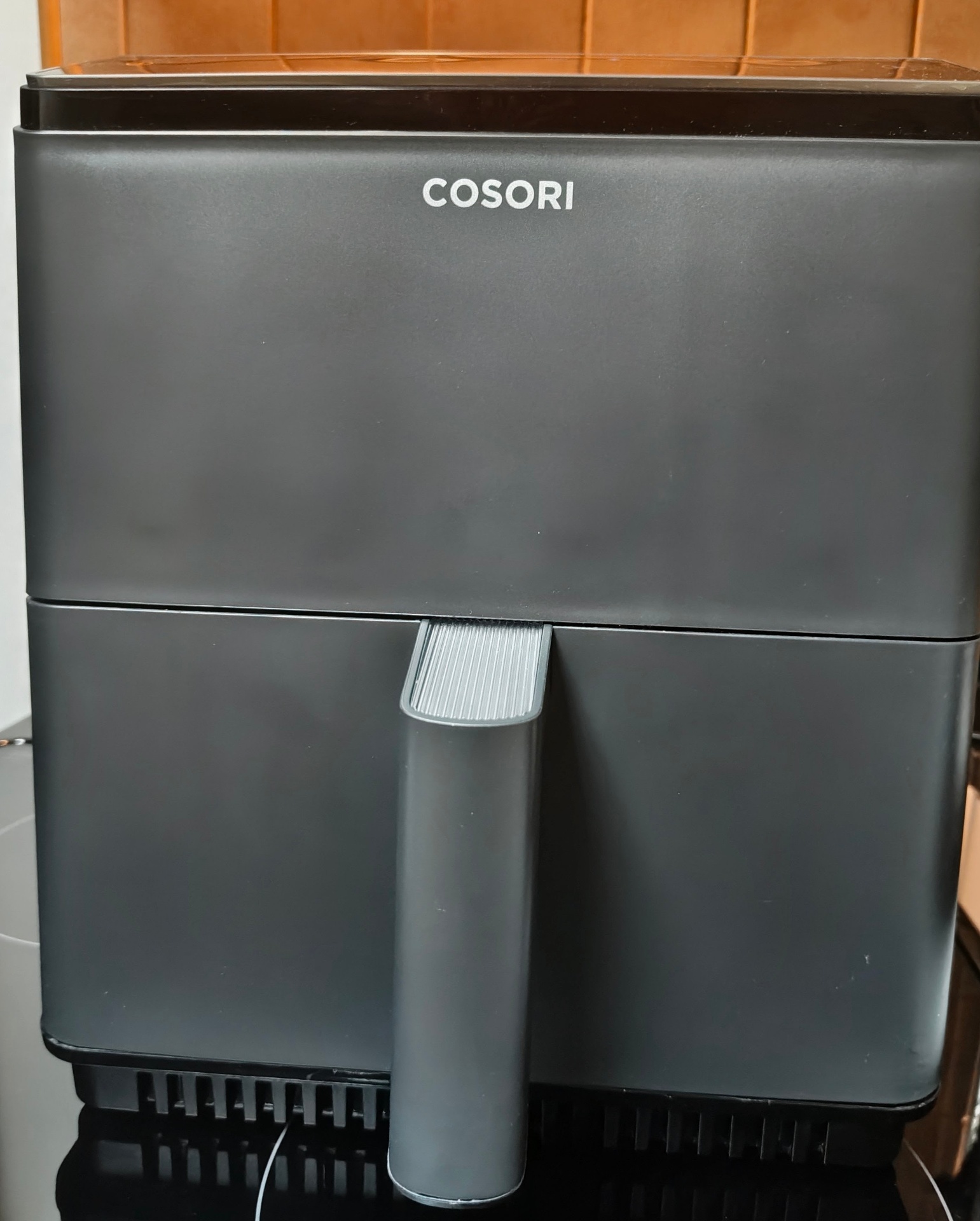
- Cooked in an air fryer
- Added to other dishes
Each technique produces a different result, and even within one cooking method the texture of the white and yolk can change depending on how the egg is cooked.
Runny, Soft or Firm Yolks?
There isn't one perfect level of egg doneness. A lot depends on what you are making and how you like your eggs.
Some dishes work well with a runny yolk, while others call for a yolk that is partially or completely set.
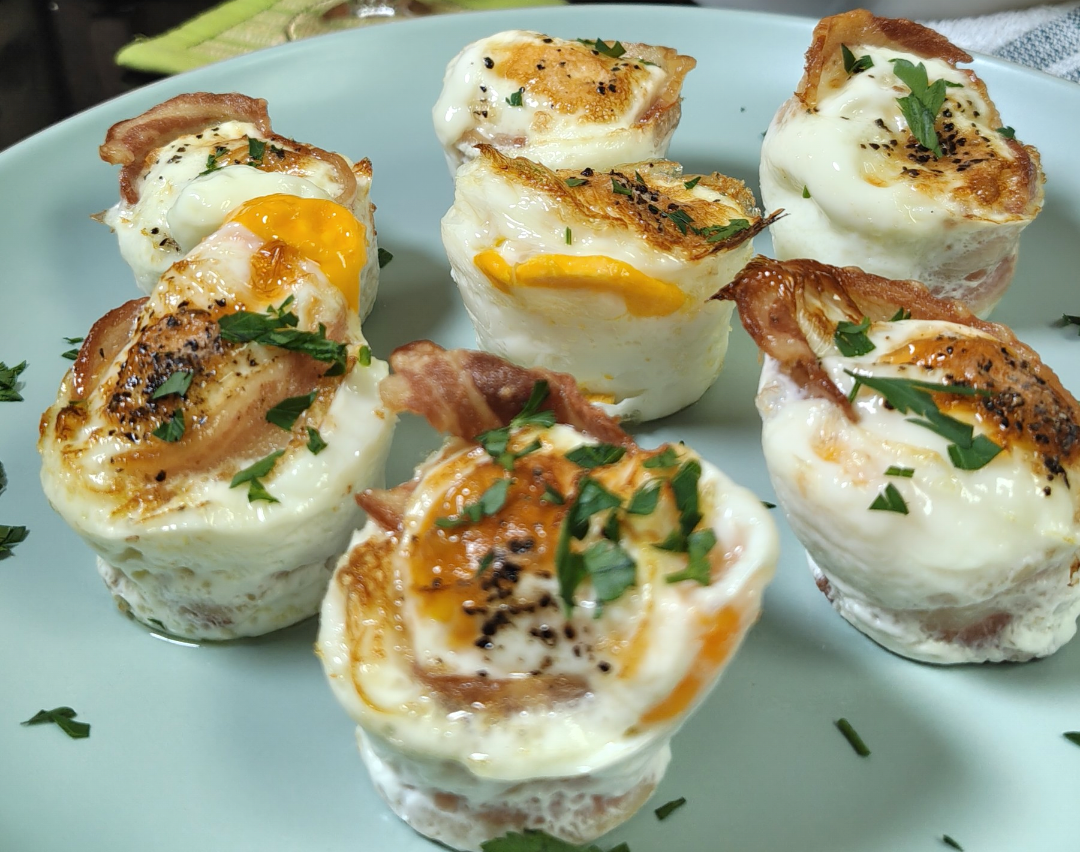
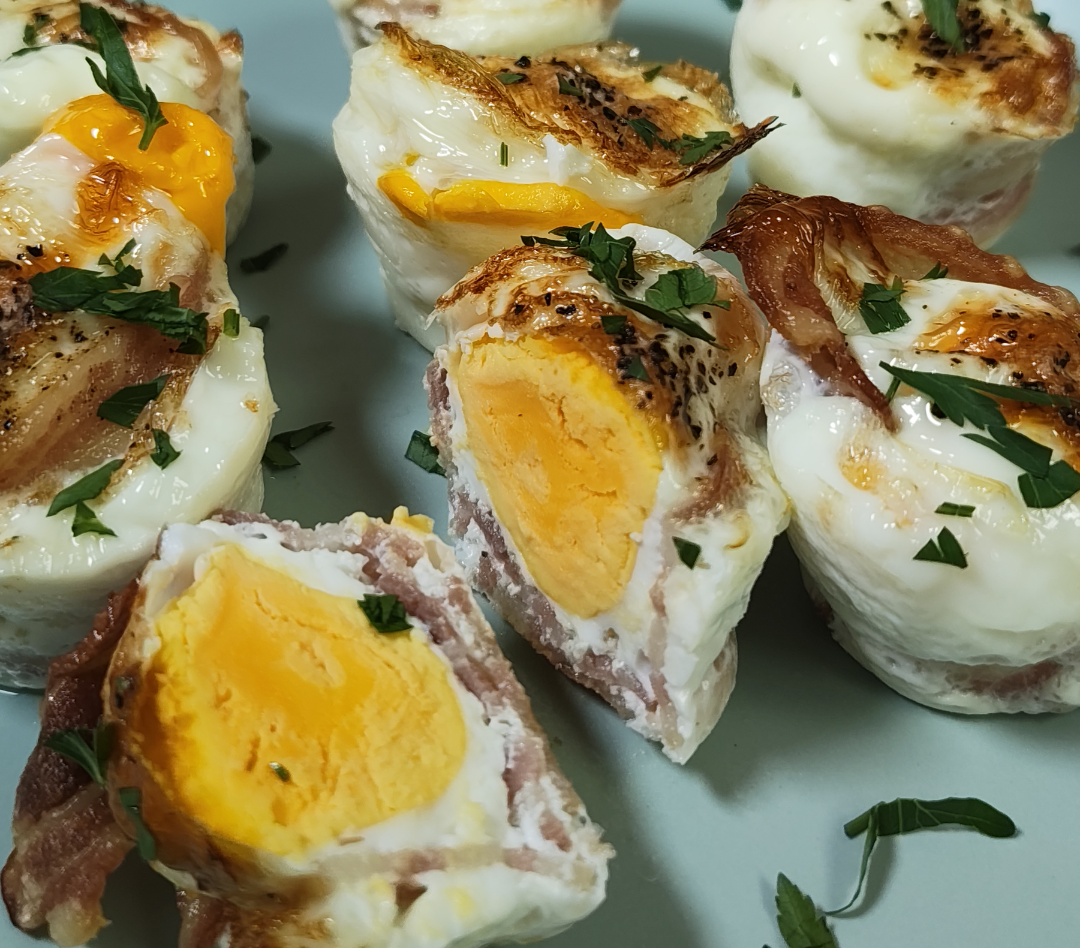
I personally like my yolks firm. When I made my Air Fryer Bacon and Eggs, I cooked them at 180°C for 8 minutes, which gave me the firm yolks I wanted.
That doesn't mean 8 minutes is a universal cooking time for eggs. It is simply a real example from my kitchen using that particular recipe and method.
Cooking Eggs in an Air Fryer
Eggs can be cooked in an air fryer in different ways depending on what you are making.
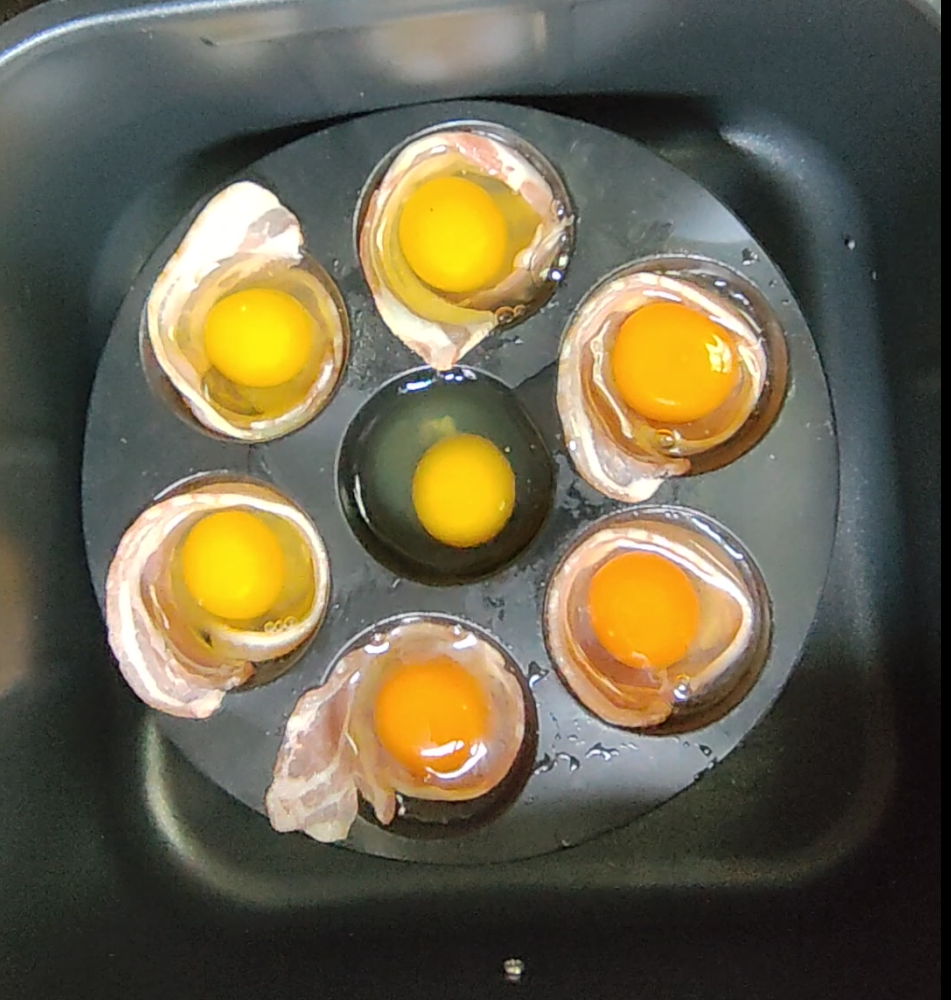
For my Air Fryer Bacon and Eggs, I used a silicone mould. I lined six cavities with raw bacon and cracked an egg into each one. The centre cavity held an egg without bacon, because I had used up the 200g pack of bacon and didn't open another.
The bacon and eggs cooked together at 180°C for 8 minutes, with no preheating and no flipping. I checked them halfway through cooking, and the finished yolks were firm, which is how I prefer them.
If you prefer a runnier yolk, start checking earlier and cook the eggs until they reach the consistency you like.
Esther's Tip: Silicone Moulds
If you're cracking eggs into a flexible silicone mould, put the empty mould inside the air fryer basket before adding the eggs.
I learned this while making my Air Fryer Bacon and Eggs. Once my silicone mould was full of raw eggs, it wasn't particularly stable to move, and you risk making a mess on the way to the air fryer.
Why Are Some Boiled Eggs Hard to Peel?
Peeling can vary from one batch of boiled eggs to the next. Several factors can affect how easily a cooked egg separates from its shell, so don't worry if some eggs peel cleanly and others don't. No single trick works every time.
Why Do Eggs Crack During Cooking?
Eggshells can crack from knocks and handling, or during cooking itself.
An egg that cracks while it is being hard cooked is a different situation from a raw egg that was already cracked when you bought or stored it. The USDA advises not buying cracked eggs, because bacteria can enter through cracks in the shell. So an egg that was cracked before you bought it shouldn't simply be cooked and eaten as if nothing had happened. For what to do with eggs that crack at home or during cooking, check the USDA guidance linked below.
Source: USDA Food Safety and Inspection Service, Is it safe to use eggs that have cracks?
Cold Eggs or Room Temperature?
Whether you need cold or room-temperature eggs depends on what you are making.
For many everyday egg dishes, follow the cooking method you are using.
Some baking recipes specifically call for room-temperature ingredients, because temperature can affect how ingredients combine and behave. Follow the recipe you are using rather than assuming eggs must always be brought to room temperature.
What Eggs Do in Cooking and Baking
Eggs can do several different jobs in cooking and baking. Depending on the dish, they can help bind ingredients together, provide structure, thicken mixtures, help create particular textures and help with emulsification.
Egg proteins coagulate when they are heated. That helps explain why liquid egg becomes firm as it cooks, and why eggs can help give structure to other foods.
Egg yolks can also help emulsify ingredients, which matters in preparations where ingredients such as fat and water need to stay combined.
This is why leaving eggs out of a recipe that depends on them isn't always as simple as removing them and carrying on with everything else unchanged.
Source: American Egg Board, REAL Egg Functionality; American Egg Board, Coagulation/Thickening; American Egg Board, Binding; American Egg Board, Emulsification
Final Thoughts
Eggs may be an everyday ingredient, but knowing a few basics about choosing, storing and cooking them makes them even more useful in the kitchen.
There isn't one correct way to cook an egg. Whether you like your yolks runny or firm, cook mostly on the stovetop or occasionally use the air fryer, the important thing is understanding the result you're aiming for and adjusting your cooking accordingly.
Sources
- U.S. Food and Drug Administration — What You Need to Know About Egg Safety
- USDA Food Safety and Inspection Service — Is it safe to use eggs that have cracks?
- U.S. Food and Drug Administration — Are You Storing Food Safely?
- American Egg Board — Coagulation/Thickening
- American Egg Board — REAL Egg Functionality
- American Egg Board — Binding
- American Egg Board — Emulsification