Cooking Guides
How to Sauté Vegetables Without Making Them Soggy
Sautéing is one of the simplest ways to cook vegetables, but sometimes they release so much moisture that they end up steaming in the pan instead.
The secret isn't just using more heat. The amount of moisture in the vegetables, the size of your pan and how much food you add at once can all affect the result.
Here are some practical ways to keep your sautéed vegetables from becoming unnecessarily watery or overcooked.
By Esther LackiePublished
What Does Sautéing Mean?
Sautéing involves cooking food in a relatively small amount of fat in a pan over moderate to moderately high heat, depending on the ingredients.
Unlike boiling, vegetables are cooked directly in the pan rather than submerged in water.
Sautéing can help vegetables develop colour while retaining some of their natural texture. It doesn't always mean cooking until crispy, though. Tender vegetables can be sautéed successfully too.
Dry Your Vegetables Before Cooking
Vegetables often carry surface moisture after washing.
Adding very wet vegetables to a pan can create extra steam and may reduce browning.
Practical tips:
- Wash vegetables as appropriate before cooking.
- Drain them thoroughly.
- Pat them dry with a clean kitchen towel or paper towel when suitable.
- Avoid leaving unnecessary water in the pan.
Some vegetables naturally release moisture even after being dried. Drying does not eliminate their internal water content.
Choose the Right Pan Size
A crowded pan can trap moisture and prevent liquid from evaporating efficiently.
When too many vegetables are added at once, they may steam rather than develop colour.
Practical tips:
- Use a pan large enough for the quantity being cooked.
- Leave some space between vegetables when practical.
- Cook larger quantities in batches if needed.
Not every vegetable needs to sit in a single layer, and not every sauté needs browning. It depends on the dish.
Use a Suitable Cooking Temperature
The heat should be appropriate for the vegetable, pan and cooking fat.
Very low heat can allow moisture to accumulate, while excessively high heat can burn the exterior before thicker vegetables become tender.
Practical tips:
- Allow the pan to heat appropriately before adding the vegetables.
- Adjust the heat as needed.
- Avoid allowing the cooking oil to smoke excessively.
- Follow the specific recipe when one is available.
There isn't one heat level that suits every vegetable.
Don't Add Too Much Oil
A modest amount of oil is often sufficient for sautéing.
Adding excessive oil will not automatically make vegetables crispier and can leave the finished dish greasy.
Use enough cooking fat for the pan and ingredients without allowing vegetables to sit in unnecessary pools of oil.
Different Vegetables Release Different Amounts of Moisture
Not all vegetables behave the same way in a frying pan. These are general characteristics of each vegetable:
Mushrooms
Mushrooms can release substantial moisture as they cook. Pan size, heat and quantity can affect how quickly that liquid evaporates.
Courgettes
Courgettes contain plenty of water and can soften quickly. Avoid overcrowding and excessive cooking when a firmer texture is desired.
Peppers
Bell peppers can be sautéed until lightly tender or cooked longer for a softer texture, depending on the dish.
Broccoli and Tenderstem Broccoli
These can retain a firmer texture when cooked briefly, although thicker stems may need additional time to become tender.
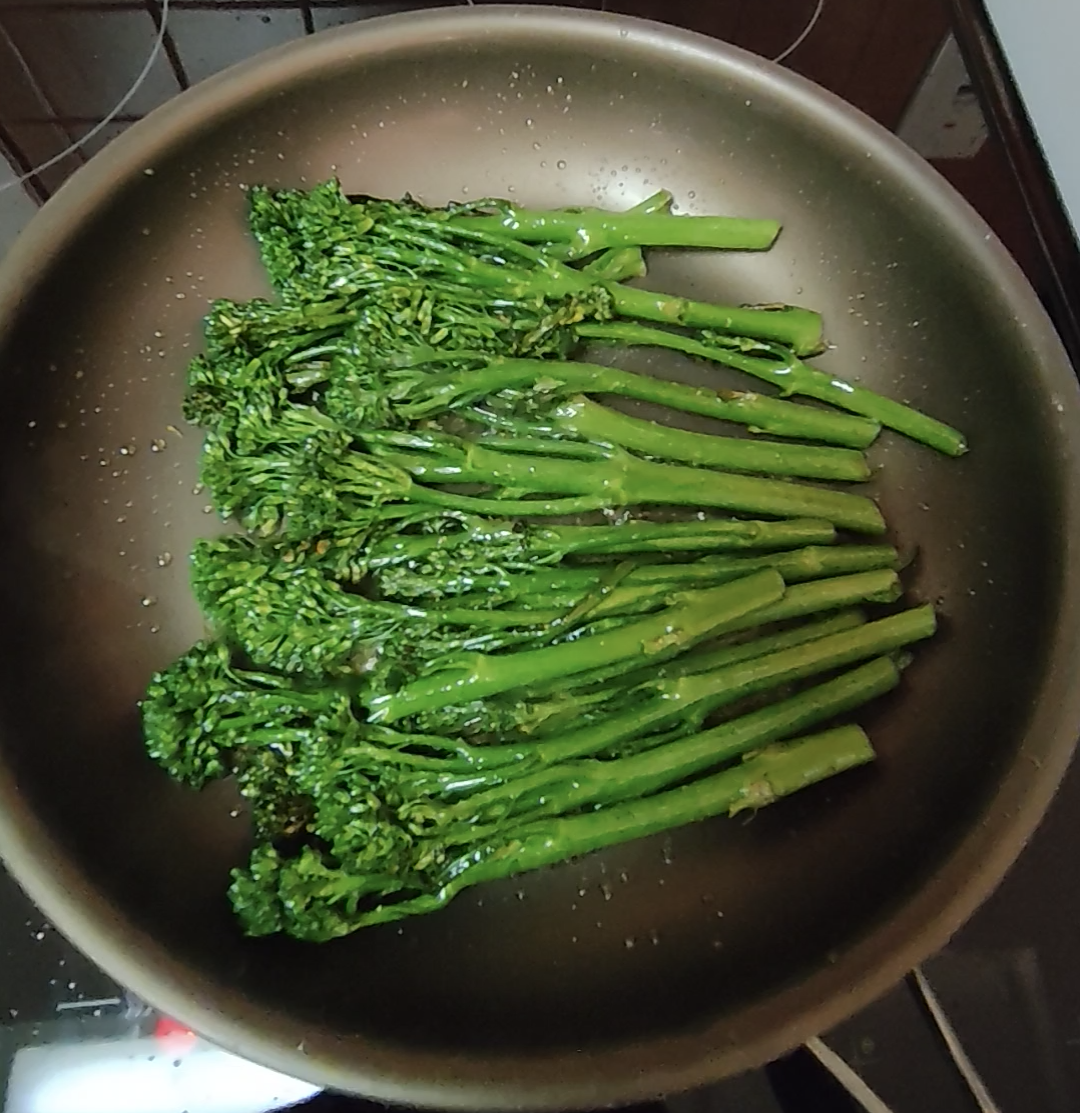
For a simple example, see my Sautéed Tenderstem Broccoli recipe. I cooked approximately 250 g of tenderstem broccoli with olive oil and a pinch of salt over medium heat for about five minutes.
Spinach
Spinach wilts quickly and releases moisture. It is not normally expected to remain crisp after cooking.
Should You Cover the Pan?
Covering a pan traps steam and can help certain vegetables soften.
However, if the goal is to encourage moisture to evaporate or develop surface browning, leaving the pan uncovered may be more suitable.
Neither approach is universally correct. Choose according to the vegetable and desired result.
Should You Stir Vegetables Constantly?
Stirring helps distribute heat and can reduce sticking, but constant movement may prevent some foods from remaining in contact with the pan long enough to develop colour.
For some vegetables, occasional stirring works well. Others may require more attention.
Follow the recipe and use judgment based on how quickly the food is cooking.
Avoid Overcooking
Vegetables can become excessively soft when cooked longer than necessary for the intended dish.
Cooking times depend on the vegetable, its size, the pan and the heat.
Check texture during cooking rather than assuming every vegetable needs the same number of minutes.
Common Mistakes When Sautéing Vegetables
- Adding vegetables while they are dripping wet: the extra water turns to steam and can reduce browning.
- Overcrowding the pan: moisture has less room to evaporate, so vegetables may steam.
- Using unsuitable heat: too low lets liquid collect, too high can burn the outside before the inside is tender.
- Adding too much oil: it won't make vegetables crispier and can leave them greasy.
- Cooking different vegetables for identical amounts of time: each vegetable softens at its own pace.
- Covering the pan when the aim is to evaporate moisture: a lid traps steam in the pan.
- Continuing to cook after the vegetables have reached the desired tenderness: they can quickly turn too soft.
Frequently Asked Questions
Why do my vegetables release water when sautéing?
Vegetables naturally contain water. Heat causes some of that moisture to escape, and a crowded pan can make it harder for the liquid to evaporate.
Should I boil vegetables before sautéing them?
Not necessarily. Some thicker or denser vegetables may benefit from brief precooking, but many can be sautéed directly. The appropriate method depends on the ingredient and desired texture.
Is olive oil suitable for sautéing vegetables?
Yes, olive oil can be suitable for many sautéing applications. Use an appropriate heat level and avoid overheating the oil.
Why are my mushrooms watery?
Mushrooms release moisture during cooking. Overcrowding and insufficient evaporation can leave liquid collecting in the pan.
How do I keep vegetables bright green?
Avoid unnecessary overcooking. The exact cooking method and timing depend on the vegetable, and colour alone is not a complete indicator of doneness.
Do sautéed vegetables need to be crispy?
No. Many sautéed vegetables are intended to be tender rather than crispy. The ideal texture depends on the dish.
Final Tip
Good sautéed vegetables start with understanding the ingredients you're cooking. Managing moisture, choosing a suitable pan and paying attention to texture can make a noticeable difference without complicating the process.